Stourhead: History, Walks and Garden Guide
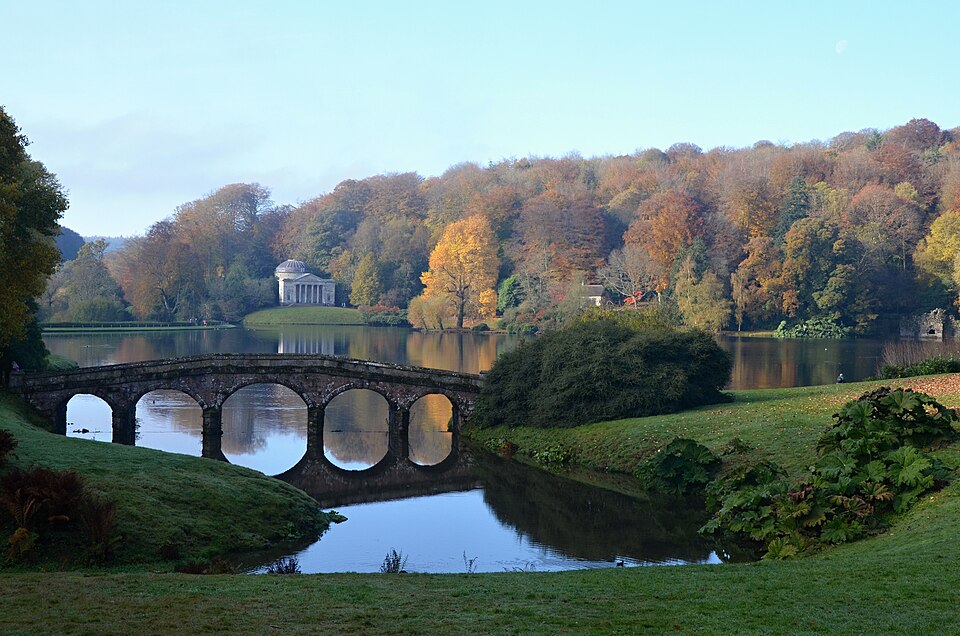
Stourhead is one of England’s defining landscape gardens: a circuit around a lake composed as a sequence of temples, trees and carefully revealed views. It is beautiful in photographs, but the real design only makes sense when walked.
Stourhead at a glance
| Location | Near Mere, Wiltshire |
|---|---|
| Created | Principally from the 1740s |
| Historic family | The Hoare family |
| Best for | Landscape design, autumn colour and gentle walks |
| Allow | Three to five hours for garden and house |
Who created Stourhead?
The estate was acquired by Henry Hoare I in the early 18th century. His son, Henry Hoare II (known as Henry the Magnificent) began creating the landscape garden around an artificial lake from the 1740s.
Rather than laying everything out in one formal view, Stourhead uses trees, water, temples and carefully chosen viewpoints so the scene keeps changing as you walk. The idea drew on landscape paintings, classical stories and the sort of Italian travel that was rather easier if you were an 18th-century gentleman with money.
Later generations altered planting and added features, so the garden visitors see is not a perfectly preserved moment from one decade. It is a living designed landscape shaped by growth, storms, changing taste and continuous management.
Walking around Stourhead lake
The main circuit is relatively short, but rushing defeats the design. Stourhead is not really a garden for power-walking through while checking your phone. Paths repeatedly hide and reveal buildings across the water, encouraging visitors to stop, look back and compare each view.
Walk in either direction, though different sequences change how the garden is experienced. The terrain includes slopes, steps and surfaces that become slippery with wet leaves. Accessible alternatives and transport assistance may be available; check current National Trust guidance.
What to look for in the garden
The Pantheon
The Pantheon stands beside the lake as one of the garden’s principal classical buildings. Its form recalls Roman architecture and provides a visual destination across the water.
The Temple of Apollo
Set on higher ground, the Temple of Apollo looks across the lake and surrounding trees. The climb gives one of Stourhead’s best-known views, particularly when autumn colour frames the water below.
The Grotto
The Grotto creates a deliberately darker, enclosed contrast with open lake views. Grottos were important features in 18th-century landscape gardens, combining water, stonework and classical references.
The Palladian Bridge
The five-arched bridge is one of the garden’s most photographed views. Its pale stone and reflection look lovely across the water, but it works best as part of the whole walk rather than something to photograph, tick off and immediately leave.
Stourhead House
The present house was designed in a Palladian style for Henry Hoare I. Its interiors and collections reflect the family’s wealth, banking connections and interests in art, books and antiquity.
The house has experienced changes, including a serious fire in 1902 followed by restoration. Room access, displays and opening days can vary, so check whether the house is included in your intended visit.
When is Stourhead at its best?
Autumn is the celebrated season, with maples, tulip trees, beech and other species producing reflections of red, gold and copper. Peak colour varies annually, generally falling somewhere through October into early November.
Spring brings fresh green growth and flowering shrubs; summer gives full canopies and long days; winter reveals the underlying structure of the landscape. Autumn weekends are busiest, so visit early, choose a weekday or accept that half of southern England may have seen the same promising photograph.
For alternatives, see Rambl’s guide to the best places for autumn colour in England, compare our best gardens in England, or build a wider heritage day around one of the best historic houses in England.
Longer walks around the estate
Stourhead’s wider estate contains woodland, farmland and parts of the chalk downland landscape. Routes may extend towards King Alfred’s Tower, a prominent triangular folly built on the wider estate.
Longer paths require proper footwear and more time than the ornamental lake circuit. Forestry work, livestock and weather may affect access, so use a current map and follow signs.
Visiting without a car
Stourhead is rural and public transport is limited. Nearby railway stations do not provide a simple walk-up connection for every visitor, and onward buses or taxis require advance planning.
If staying locally, Mere, Bruton, Frome and Warminster offer different combinations of accommodation and transport. Confirm the final leg before booking; “only a few miles from the station” is an attractive phrase until those miles contain no pavement.
Practical tips
- Book parking or admission ahead when advised during peak autumn colour.
- Arrive close to opening time for calmer paths and reflections.
- Wear shoes with grip for slopes and wet leaves.
- Check separate house and garden opening arrangements.
- Allow time to pause at viewpoints rather than treating the lake as a lap.
- Keep dogs within the estate’s current rules and livestock guidance.
Explore Britain’s gardens and landscapes
Discover historic estates, woodland walks and countryside places through Rambl’s growing Explore Britain collection.
Explore gardens and parks