Pendle Hill: Walks, Villages and Witch Country
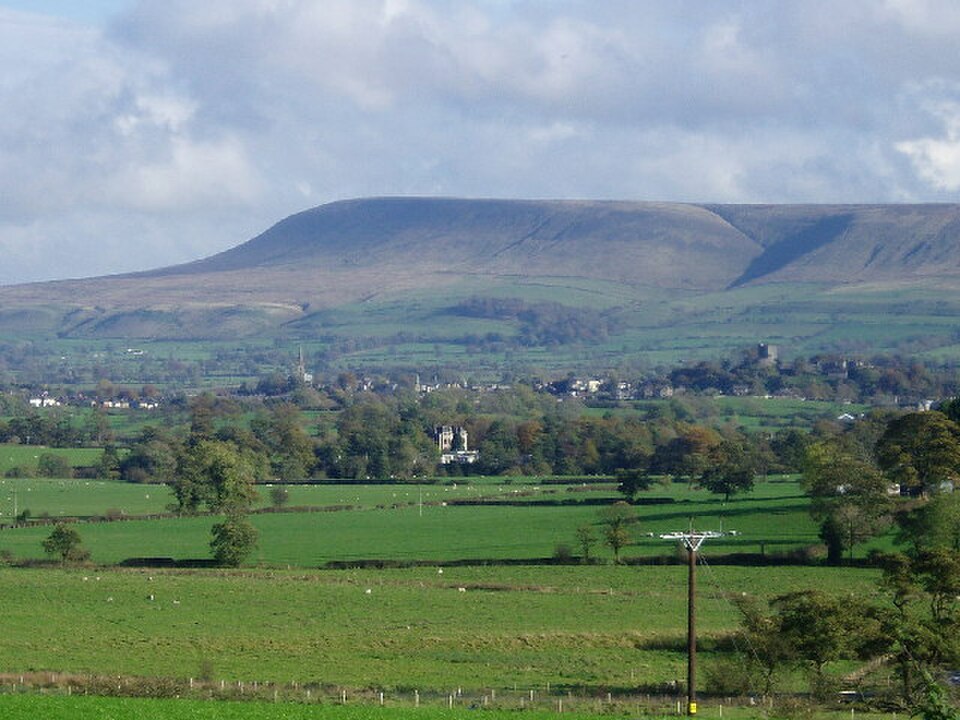
Pendle Hill is both a Lancashire landmark and the centre of one of England’s most notorious historical stories. Its walks cross open moorland above stone villages and old farms, while the 1612 witch trials still shape how the area is described, sometimes carefully, sometimes with rather more broomstick than evidence.
Pendle at a glance
| Best base | Barley, Clitheroe or Downham |
|---|---|
| Classic walk | Pendle Hill from Barley |
| Best for | Views, villages and witch-trial history |
| Terrain | Steep paths, fields and exposed moorland |
| Allow | Half a day for the summit; a weekend for the wider area |
Why Pendle Hill matters
Pendle rises abruptly above the Ribble Valley and the towns of east Lancashire. At 557 metres it is not among Britain’s highest hills, but its isolated shape and broad summit make it visible from a remarkable distance.
George Fox climbed Pendle in 1652 and later described receiving a vision connected with his religious mission, an event important in the history of the Quaker movement. Four decades earlier, the surrounding communities had become associated with accusations of witchcraft that led to the Lancaster trials of 1612.
The classic Pendle Hill walk from Barley
Barley is the usual starting point for the summit. Routes commonly pass Lower Ogden Reservoir before climbing steeply towards the plateau, returning through fields and lanes or completing a wider circuit.
The direct ascent includes sustained stone steps and can feel considerably steeper than the hill’s height suggests. Pendle’s 557 metres can be surprisingly personal about making you earn the view. Once on top, views stretch across the Forest of Bowland, Ribble Valley and, in clear conditions, towards distant northern and Welsh hills.
The plateau is exposed and can be confusing in cloud. Carry a map, warm layer and waterproofs. A clear forecast makes the summit more enjoyable; Pendle’s history supplies quite enough atmosphere without adding accidental navigation drama.
A gentler walk around the reservoirs
Lower and Upper Ogden Reservoirs provide a lower-level alternative from Barley. Woodland, water and the steep flank of Pendle create a satisfying shorter circuit, particularly in autumn.
Paths can be muddy and forestry work may affect access. Follow current signs and avoid entering closed areas. This route is useful when wind or cloud makes the summit unattractive.
Newchurch and the Pendle witch story
Newchurch-in-Pendle is closely linked with the 1612 cases. St Mary’s Church contains a carving known locally as the “Eye of God”, while the churchyard includes the Nutter family name associated with Alice Nutter, one of those executed.
Visitors should remember that the accused were real people living in poverty, illness and local conflict. They were not members of an organised occult cult. Our detailed history of the Pendle witches separates court evidence from later folklore. For the wider tradition, explore our guide to haunted places in England and the Ancient Places & Folklore collection.
Roughlee and Alice Nutter
Roughlee lies east of Pendle Hill and is another useful stop on a history-focused route. A modern statue of Alice Nutter stands in the village, representing a woman whose precise role and beliefs remain debated.
The surrounding lanes and footpaths reveal a landscape of scattered farms and small communities. Walking between places gives a better sense of the distances involved in 1612 than driving directly from marker to marker.
Downham: the classic stone village
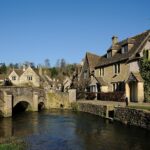
Downham sits beneath Pendle’s northern slope and is known for its stone cottages, stream and largely unaltered centre. The Assheton family estate historically controlled much of the village, which helped preserve its appearance.
It has appeared in film and television, but remains a residential working village. Park carefully, keep noise down and use public paths rather than gateways that simply look picturesque.
Clitheroe and the castle
Clitheroe makes the most practical base, with rail access, accommodation and evening food. Its small Norman keep stands on a limestone outcrop above the town and now forms part of a museum and park.
The town connects Pendle with the wider Ribble Valley, including walks around Waddington, Whalley and the Forest of Bowland. For visitors without a car, it is generally easier than staying in the smallest villages.
When to visit Pendle
Spring and early summer bring longer walking days. Autumn suits the villages, reservoirs and witch-trial history particularly well, though October weekends near Halloween can be busy. Winter offers stark views but demands short-day planning and proper hill equipment.
Do not build a visit solely around supernatural entertainment. The documented history, Quaker connection and landscape are already more interesting than generic witch decorations bought in bulk.
Planning a Pendle weekend
- Use Clitheroe for trains, accommodation and wider facilities.
- Choose Barley for immediate summit and reservoir access.
- Visit Newchurch and Roughlee for the 1612 story.
- Add Downham for a quieter village walk.
- Keep a low-level route ready for poor visibility.
Read the true Pendle witches story
Discover what happened in 1612, what the court records say and how folklore later transformed the accused into something else.
Read the history