Best Places to See Autumn Colours in England
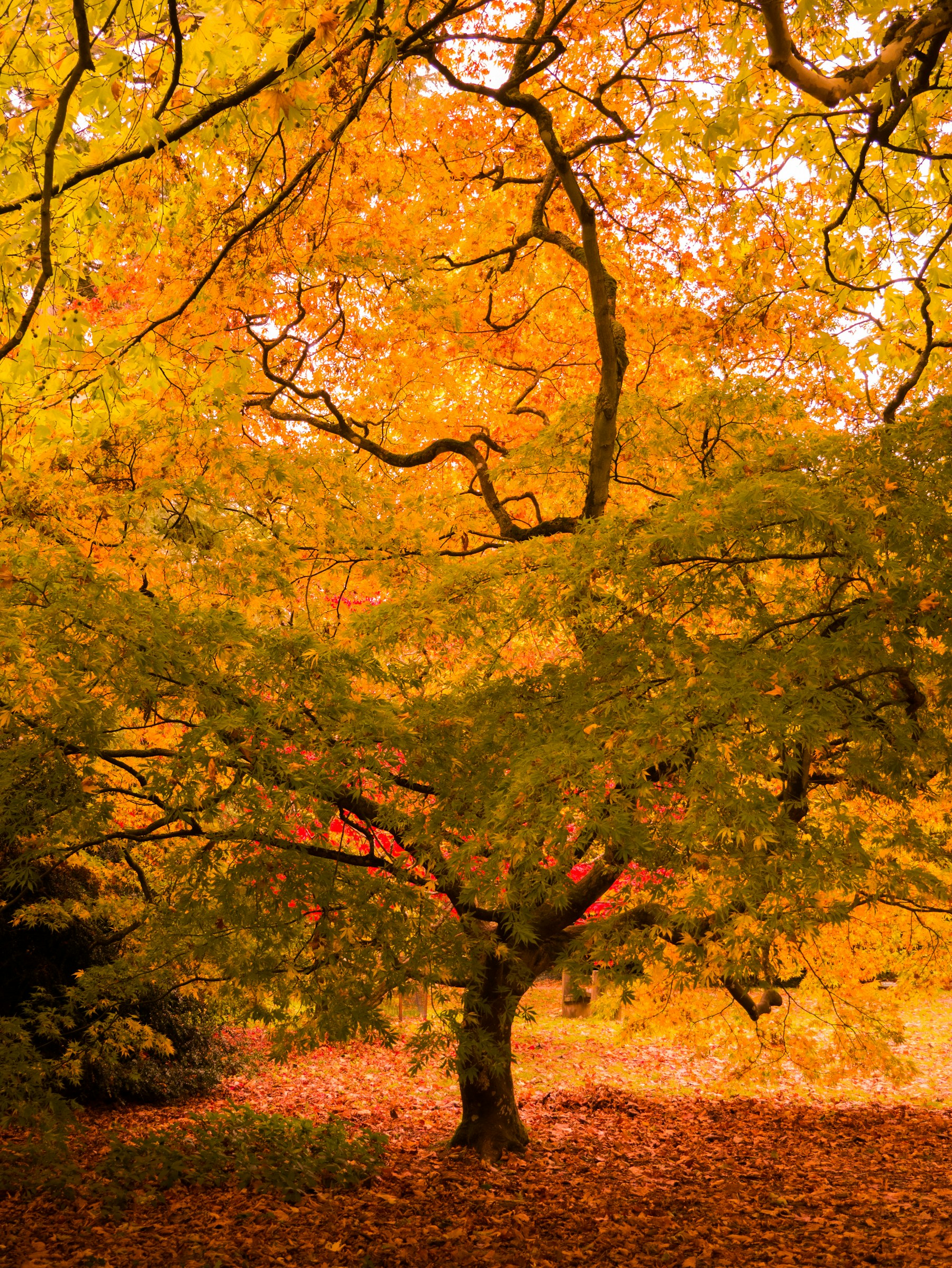
England’s best autumn colours appear in arboretums, ancient woods, landscaped estates and national parks from late September into November. Timing is never exact, but these places give you the strongest chance of finding copper beech, golden larch, scarlet maple and a walk worth doing even when the leaves refuse to perform on schedule.
Quick picks
| Place | Best for | Region |
|---|---|---|
| Stourhead | Classical views reflected in a lake | Wiltshire |
| Westonbirt Arboretum | Range and intensity of colour | Gloucestershire |
| New Forest | Ancient woodland and free-ranging ponies | Hampshire |
| Borrowdale | Woodland beneath dramatic fells | Cumbria |
| Padley Gorge | Atmospheric old oak woodland | Derbyshire |
When do autumn colours peak in England?
Colour often begins in late September, becomes strongest through October and continues into early November in southern or sheltered areas. Species turn at different times: horse chestnut and birch may change early, while oak can hold its leaves well into November.
Temperature, rainfall, sunshine and wind all affect the display. A dry, settled spell with cool nights tends to help; a storm can bring the curtain down abruptly. Treat “peak weekend” predictions as useful estimates rather than appointments issued by the trees. The trees remain frustratingly unwilling to check your hotel booking.
1. Stourhead, Wiltshire
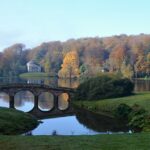
Stourhead is one of England’s great designed landscapes. Its lake, classical temples, bridge and carefully framed views were created to be discovered gradually on foot. Autumn adds strong colour from beech, tulip trees, maples and other ornamental planting.
The standard lakeside circuit is manageable and packed with viewpoints, though slopes and wet leaves require care. It is a ticketed National Trust property and popular at peak colour, so check opening times and booking information before travelling.
2. Westonbirt, the National Arboretum
Westonbirt contains thousands of trees and shrubs collected from around the world, making it perhaps the most reliable single destination for variety. Japanese maples bring intense reds and oranges, while broad avenues and quieter woodland paths allow several hours of wandering.
Peak weekends can be exceptionally busy and advance booking may be required. Visit on a weekday or early in the day if possible. Dogs are permitted only in designated areas, so check the current map and rules.
3. The New Forest, Hampshire
The New Forest combines ancient oaks, beech woods, heathland and grazing animals across a large living landscape. Bolderwood, Blackwater and Rhinefield provide accessible woodland choices, while longer routes reach quieter enclosures and open heath.
Free-roaming ponies and cattle have priority on roads. Drive slowly, never feed them and keep dogs under close control. Autumn also coincides with pannage, when pigs may be released to eat fallen acorns; charming to observe from a respectful distance, less charming as an invitation to interfere.
4. Borrowdale, Lake District
Borrowdale’s ancient Atlantic oakwoods sit beneath some of the Lake District’s most dramatic fells. Moss-covered walls, birch, oak and the River Derwent create a richly textured autumn landscape even when low cloud covers the summits.
Walk between Rosthwaite and Grange, explore paths around Castle Crag or combine the valley with the Buttermere circuit farther west. For more options, see the best autumn walks in the Lake District.
5. Padley Gorge, Peak District
Padley Gorge threads Burbage Brook through old oak woodland and gritstone boulders. Twisted trees, moss and tumbling water make it atmospheric in every season, but October brings its richest colour.
Use the Padley Gorge walking guide and extend onto the Longshaw Estate. Paths become slippery after rain and parking fills quickly, so train access via Grindleford is worth considering.
6. Forest of Dean, Gloucestershire
The Forest of Dean contains broadleaf woods, conifer plantations, old tramroads and viewpoints above the Wye Valley. Beechenhurst provides marked trails, while Symonds Yat offers broad views over wooded hills and the river.
Choose established trails and check forestry notices, as operations can close paths temporarily. Wild boar live in the forest; give them space, keep dogs controlled and never approach young animals.
7. Strid Wood and Bolton Abbey, Yorkshire
Strid Wood follows the River Wharfe through ancient oak woodland below Bolton Abbey. Rivers, ruins and mature trees make this one of northern England’s most complete autumn days out.
Stay on designated paths around the Strid, where the Wharfe narrows into a powerful and dangerous rocky channel. Estate parking charges apply and river conditions can affect routes. Combine it with nearby Grassington using our Yorkshire Dales autumn walks.
8. Sheffield Park and Garden, East Sussex
This historic landscape garden uses lakes and carefully placed trees to build long reflections and layered views. Acers, swamp cypress and other specimen trees produce striking reds, oranges and golds through autumn.
It is a managed National Trust garden with admission arrangements and seasonal events, so check current information. The wider estate offers more open walking if the garden paths become busy.
9. Grizedale Forest, Cumbria
Between Windermere and Coniston, Grizedale combines forest tracks, sculptures and viewpoints towards the surrounding fells. Mixed planting gives a longer season than a single-species wood, while waymarked routes range from short strolls to substantial hikes.
Forestry work can divert trails and some routes are shared with cyclists. Check signage and choose a route suited to daylight. Hawkshead makes a useful nearby village base.
10. Burnham Beeches, Buckinghamshire
Burnham Beeches protects ancient beech and oak pollards, ponds, heath and woodland close to London. The veteran trees have enormous character and the site is especially effective in mist or low autumn light.
It is a protected nature reserve rather than an ornamental garden. Follow access rules, keep away from fragile veteran-tree roots where directed and expect muddy paths after rain.
How to plan an autumn colour trip
- Check recent photographs or official updates for current colour.
- Visit early on weekdays where possible.
- Carry waterproofs and footwear suited to wet leaves and mud.
- Keep dogs controlled around livestock and wildlife.
- Use public transport or pre-book parking at popular estates.
- Plan a nearby village, house or pub for poor weather.
Explore autumn in Britain
Find woodland walks, historic villages and countryside weekends across Rambl’s growing guide to Britain beyond the obvious stops.
Explore Britain