Best Castles to Visit in England: 15 Fortresses, Ruins and Royal Strongholds
England’s best castles are not all the same sort of thing. Some are battered Norman ruins, some gradually became comfortable country houses, and others are still used by royalty or dukes. The interesting bit is where they were built: above harbours, roads, river crossings and borders. Once you stand there, the choice of location usually becomes fairly obvious.
15 castles worth building a trip around
| Castle | County/area | Character |
|---|---|---|
| Corfe Castle | Dorset | Dramatic ruin |
| Bamburgh Castle | Northumberland | Coastal stronghold |
| Dover Castle | Kent | Fortress and military history |
| Warwick Castle | Warwickshire | Major medieval castle |
| Windsor Castle | Berkshire | Royal residence |
| Alnwick Castle | Northumberland | Living ducal castle |
| Kenilworth Castle | Warwickshire | Palace ruins |
| Bodiam Castle | East Sussex | Moated late-medieval castle |
| Goodrich Castle | Herefordshire | Wye Valley ruin |
| Warkworth Castle | Northumberland | Percy stronghold |
| Richmond Castle | North Yorkshire | Norman keep |
| Arundel Castle | West Sussex | Castle and later house |
| Leeds Castle | Kent | Island setting |
| Tintagel Castle | Cornwall | Clifftop ruins and legend |
| Lindisfarne Castle | Northumberland | Tidal-island setting |
1. Corfe Castle, Dorset
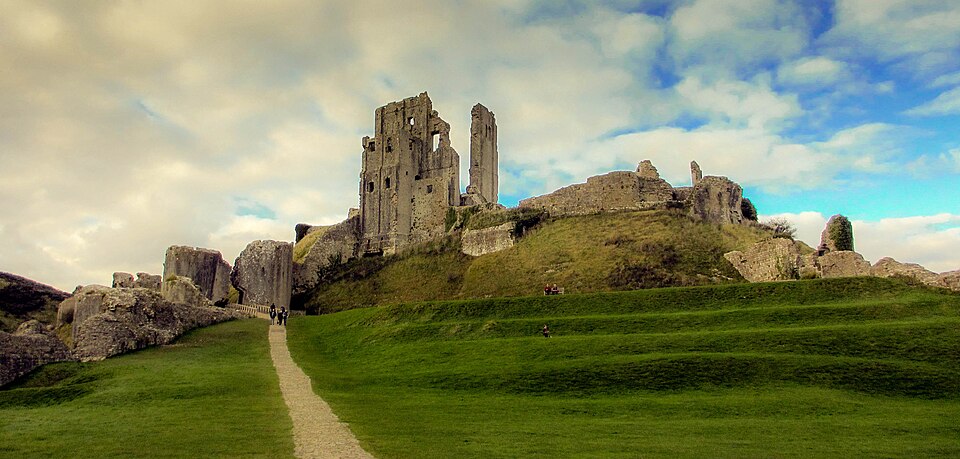
Corfe’s ruins occupy a natural gap in the Purbeck Hills, towering over the village below. The site has a long history, including major Norman building and later royal and military importance. The Civil War left the castle in the ruined form that makes it so visually powerful today.
Rambl’s Corfe Castle guide combines the ruins with nearby walking, because Purbeck is too good to spend the whole day indoors.
2. Bamburgh Castle, Northumberland
Bamburgh sits on a basalt outcrop above a huge sweep of Northumberland beach. Earlier royal centres occupied the site long before the castle took its later form, and the position facing the North Sea makes the strategic logic obvious. Walk the beach for the classic view back to the walls.
3. Dover Castle, Kent
Dover is a lesson in repeated military importance. The great medieval keep is only one layer; the site also contains Roman, Napoleonic and twentieth-century history. Its position above the narrowest part of the English Channel explains why generations kept returning to the same hill, apparently deciding each time that it still needed a bit more fortification.
4. Warwick Castle
Warwick grew from an early fortification into one of England’s major castles. Towers, walls and great rooms survive on a scale that makes it particularly useful for understanding how a fortress could also become a high-status residence.
5. Windsor Castle
Windsor is both a historic castle and a functioning royal residence. William the Conqueror established a castle here in the eleventh century; later monarchs repeatedly rebuilt and expanded it. St George’s Chapel is as important to the visit as the defensive architecture.
6. Alnwick Castle
Alnwick’s position close to the Scottish border shaped its history. It remains the seat of the Duke of Northumberland and combines medieval defensive architecture with later residential interiors. Pair it with the town and, if time allows, the wider Northumberland coast.
7. Kenilworth Castle
Kenilworth’s red sandstone ruins tell two stories at once: medieval fortress and Renaissance palace. The great keep, later apartments and Elizabethan associations make it one of the best places to see how castles evolved once comfort and display mattered as much as defence.
8. Bodiam Castle
Bodiam is the castle children draw: square plan, round corner towers and a broad moat. It dates from the late fourteenth century and is visually complete enough to make defensive architecture easy to read, even though historians continue to debate the balance between military function and status display.
9. Goodrich Castle
Goodrich overlooks the River Wye from a wooded ridge. The setting is less theatrical than Corfe but equally instructive: the river corridor and border country explain the castle’s importance. Combine it with a Wye Valley walk for a day that feels properly joined up.
10. Warkworth Castle
Warkworth’s great keep dominates the village above the River Coquet. Long associated with the Percy family, the castle is one of Northumberland’s most satisfying combinations of fortress, village and landscape.
11. Richmond Castle
Richmond Castle was founded soon after the Norman Conquest and rises above the River Swale. Its keep and curtain walls sit beside one of Yorkshire’s finest historic towns, making it an easy addition to a Yorkshire Dales weekend.
12. Arundel Castle
Arundel’s medieval origins are clear in the motte and keep, but much of the castle visitors see reflects later rebuilding. That mixture is useful rather than disappointing: English castles were living properties, not archaeological exhibits waiting politely for us to arrive.
13. Leeds Castle
Leeds Castle occupies islands in a lake in Kent and has been repeatedly altered over centuries. It is less about ruined military drama and more about the long transformation from medieval stronghold to elite residence.
14. Tintagel Castle
Tintagel’s fragmentary ruins stand on a Cornish headland in one of England’s most dramatic archaeological settings. The site has important early-medieval remains and later a castle built by Richard, Earl of Cornwall. Its association with King Arthur belongs to legend and literary tradition rather than straightforward historical fact, which is precisely why it belongs on Rambl.
15. Lindisfarne Castle
Lindisfarne Castle is later than many entries here, built in the Tudor period and later transformed into a house. Its real distinction is setting: Holy Island is cut off by the tide, so every visit must be planned around the published causeway crossing times.
How to choose
For ruins and landscape choose Corfe, Goodrich or Tintagel. For scale and interiors choose Warwick, Windsor or Alnwick. For coastal drama choose Bamburgh or Lindisfarne. For a castle that fits neatly into a walking weekend, Northumberland, Purbeck and the Wye Valley are particularly strong.
- Best for a first castle trip: Warwick or Dover for scale and plenty to explore.
- Best castle-and-walk day: Corfe, with the Purbeck landscape immediately outside the gates.
- Best coastal setting: Bamburgh, with Lindisfarne a close second if the tide is on your side.
- Best atmospheric ruin: Tintagel for sheer drama, or Goodrich for a quieter day in the Wye Valley.
Castle trip FAQs
Which English castle is best for a day trip?
That depends on where you are starting, but Warwick, Dover, Corfe and Windsor are all substantial enough to build a full day around. Corfe is especially good if you want to combine history with a countryside walk.
Which castles are best if I prefer ruins?
Corfe, Goodrich, Kenilworth and Tintagel all reward people who prefer ruined walls, open landscapes and a bit of imagination to fully furnished rooms.
Can I visit English castles without a car?
Some are much easier than others. Windsor is particularly straightforward by rail, while more rural sites can need a bus, taxi or a longer walk. Check the final connection as carefully as the train journey before setting off.
Explore more in Rambl’s Castles & Ruins collection and our guide to castles and historic houses in Derbyshire. If you are turning a castle visit into a weekend away, our best English villages to visit and best UK hiking trails guides are useful places to plan the rest of the trip.