Best English Villages to Visit: 15 Beautiful Places for a Countryside Weekend
The best English villages are not simply rows of photogenic cottages. The ones worth travelling for have something beyond the postcard: a church, a ruined castle, a footpath from the door, a proper pub, a coastline, a river or enough history to keep you lingering after lunch.
Our 15 picks
| Village | County | Best for |
|---|---|---|
| Castle Combe | Wiltshire | Historic stone streets |
| Lacock | Wiltshire | Abbey and preserved village |
| Bibury | Gloucestershire | Classic Cotswold scenery |
| Broadway | Worcestershire | Cotswold walking |
| Lower Slaughter | Gloucestershire | River and mill |
| Grasmere | Cumbria | Lakes and literary history |
| Hawkshead | Cumbria | Old lanes and gentler walks |
| Grassington | North Yorkshire | Dales countryside |
| Castleton | Derbyshire | Castle, caverns and Mam Tor |
| Edale | Derbyshire | Big walking country |
| Alfriston | East Sussex | South Downs and heritage |
| Robin Hood’s Bay | North Yorkshire | Coast and old lanes |
| Staithes | North Yorkshire | Fishing-village character |
| Port Isaac | Cornwall | North Cornwall coast |
| Cartmel | Cumbria | Priory and food |
1. Castle Combe, Wiltshire
Castle Combe is the village people imagine when someone says “Cotswolds” even though it sits just beyond the core Gloucestershire heartland. Honey-coloured stone houses descend through a wooded valley towards the Bybrook, with the medieval market cross and St Andrew’s Church at the centre.
It is deservedly popular, so arrive early, stay overnight or walk beyond the famous lower street. The village is much easier to appreciate once you are no longer standing behind six people taking the same photograph. Our full Castle Combe guide covers the village, surrounding walks and practical planning.
2. Lacock, Wiltshire
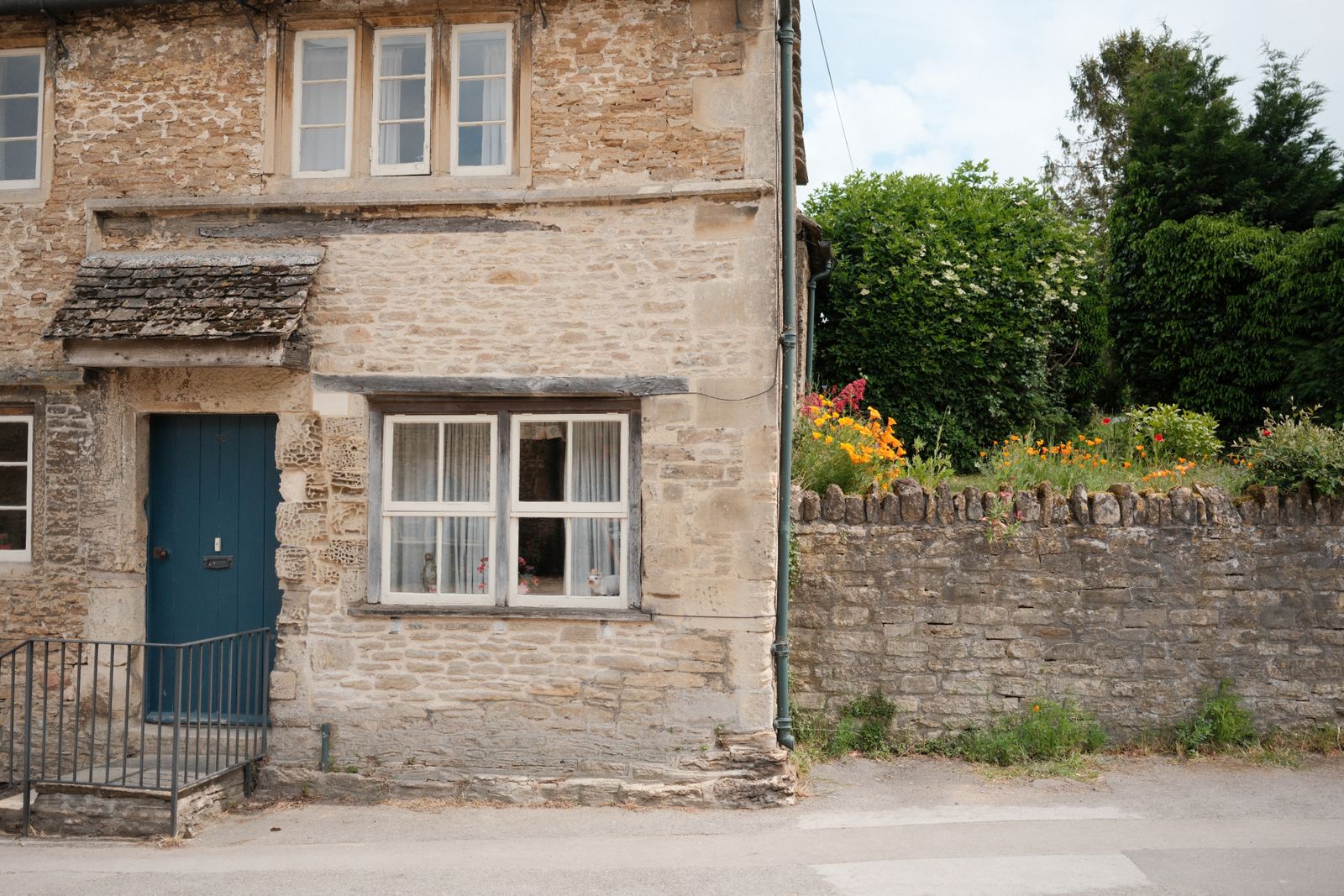
Lacock has a remarkably intact historic centre, partly because much of the village is cared for by the National Trust. Timber framing, warm stone and narrow streets sit beside Lacock Abbey, whose history stretches from medieval nunnery to country house and the early story of photography.
The village is a strong choice for people who want architecture and history rather than simply a pretty lunch stop. Its fame as a filming location is almost incidental once you start looking properly.
3. Bibury, Gloucestershire
Bibury’s Arlington Row is one of the most photographed groups of cottages in England. The River Coln, water meadows and stone buildings give the village its appeal, but the experience is much better if you walk beyond the best-known viewpoint and follow the lanes and paths into the surrounding countryside.
4. Broadway, Worcestershire
Broadway has a broad, handsome high street and immediate access to the Cotswold escarpment. The classic outing climbs to Broadway Tower, where the landscape opens towards the Vale of Evesham. It makes a better base than a quick drive-through because cafés, pubs and accommodation give you somewhere to return after a proper walk.
5. Lower Slaughter, Gloucestershire
The River Eye runs through Lower Slaughter beside stone houses and an old mill. Its name comes from an Old English word associated with wet or muddy ground, not anything more alarming. A short walk links Lower and Upper Slaughter, making this one of the easiest Cotswold village pairs to explore on foot.
6. Grasmere, Cumbria
Grasmere combines a compact village, Wordsworth associations and one of the Lake District’s gentler landscapes. Walk beside the lake, head into Easedale or link paths towards Rydal. If the weather turns, the village has the great Lakeland luxury of somewhere warm to sit while the cloud rearranges itself.
See our guide to the best Lake District villages for a weekend for more bases.
7. Hawkshead, Cumbria
Hawkshead’s whitewashed passages and small squares feel quite different from the greyer stone settlements elsewhere in the Lakes. Connections with William Wordsworth and Beatrix Potter add interest, while Tarn Hows and Grizedale Forest provide straightforward nearby walking.
8. Grassington, North Yorkshire
Grassington sits above the River Wharfe with limestone country in every direction. Linton Falls and riverside paths suit an easier day; longer walks reach Hebden, Burnsall and the moors. It also has enough cafés, pubs and shops to remain useful when the Yorkshire weather produces a strongly worded objection to your plans.
Compare it with other bases in our Yorkshire Dales village guide.
9. Castleton, Derbyshire
Castleton sits below Peveril Castle and Mam Tor, surrounded by limestone dales and caverns. Few English villages place such varied walking so close to the front door. For a classic day, climb Mam Tor and the Great Ridge; for worse weather, stay lower around Cave Dale and Hope.
Our Peak District village guide compares Castleton with other walking bases.
10. Edale, Derbyshire
Edale is less polished than some entries here, which is part of the point. The village lies beneath Kinder Scout and marks the traditional start of the Pennine Way. Come for walking rather than boutiques: the Kinder Scout route is one of the Peak District’s defining days out.
11. Alfriston, East Sussex
Alfriston sits in the Cuckmere valley beneath the South Downs. The medieval Clergy House, old high street and parish church provide the heritage; the downs and river provide the walking. It works especially well as a quieter base for exploring the chalk landscape around Cuckmere Haven.
12. Robin Hood’s Bay, North Yorkshire
Steep lanes squeeze between old cottages on the descent to Robin Hood’s Bay. The beach, Cleveland Way and smuggling stories make it one of the most distinctive coastal villages in England. Check tide times if you plan to walk on the shore and keep well away from unstable cliffs.
13. Staithes, North Yorkshire
Staithes gathers tightly around a narrow harbour beneath high cliffs. Fishing history and red-roofed cottages give it a strong sense of place, while the Cleveland Way provides immediate coastal walking. Parking is generally above the old village, which is useful preparation for the return climb.
14. Port Isaac, Cornwall
Port Isaac’s lanes descend to a small harbour on the north Cornwall coast. It can be busy, but early mornings and evenings recover much of its character. Coastal-path walking in either direction quickly leaves the busiest streets behind.
15. Cartmel, Cumbria
Cartmel has a magnificent priory, old village centre and an unusually strong food reputation for somewhere so small. The surrounding low countryside makes it a gentler alternative to a high-fell weekend, while the southern Lakes remain within reach.
When is the best time to visit?
Spring and autumn usually offer the best balance of daylight, colour and manageable crowds. Summer gives longer evenings but brings more visitors to famous villages. Winter can be wonderfully quiet, though reduced opening hours and transport make planning more important.
For a seasonal shortlist, see Rambl’s best English villages to visit in autumn. For the bigger picture, browse Villages & Market Towns.