21 British Folklore Creatures and Where Their Stories Come From
British folklore is crowded with things that wait beside old roads, haunt pools, tidy houses after dark and occasionally make the sensible decision to avoid people altogether. These are 21 of the best-known creatures from English, Scottish, Welsh and Cornish tradition, with the places and stories that gave them a home.
A quick guide to the creatures
| Creature | Tradition | Usually associated with |
|---|---|---|
| Black Shuck | East Anglia | Churchyards, lanes and the coast |
| Barghest | Northern England | Ghostly black dogs |
| Boggart | Northern England | Homes, farms and troublesome places |
| Brownie | Scotland & Borders | Helpful household spirits |
| Kelpie | Scotland | Rivers and lochs |
| Selkie | Scotland & Northern Isles | Seal-people and the sea |
| Redcap | Border country | Ruined castles and violent places |
| Knocker | Cornwall | Mines |
1. Black Shuck
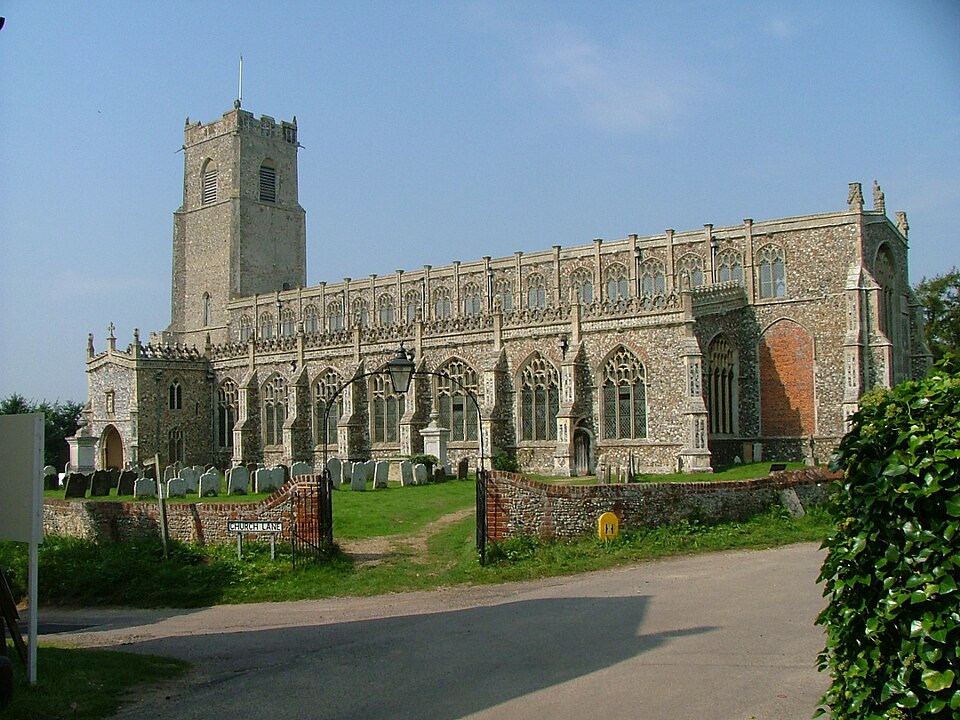
East Anglia’s Black Shuck is a spectral black dog, usually described as unnaturally large and encountered on lonely roads, coast paths or near churches. The most famous story attaches the creature to the violent storm of 1577, when contemporary accounts described extraordinary events at churches in Bungay and Blythburgh.
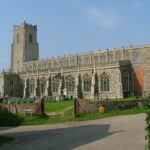
Later folklore turned those events into the familiar story of a black dog bursting into the churches. Rambl’s Black Shuck guide separates the documented storm accounts from the folklore that grew around them, while our Blythburgh church guide visits one of the places most closely tied to the legend.
2. The Barghest
The Barghest belongs mainly to northern English tradition, especially Yorkshire. Like Shuck, it often appears as a huge black dog, but versions of the story vary considerably from place to place. In some tales it is an omen; in others it stalks particular streets, lanes or settlements. That local variation is typical of British folklore: the name may travel, but the creature changes with the landscape.
3. Boggarts
Boggarts are troublesome spirits associated particularly with Lancashire and northern England. Some traditions place them in houses or farms, where they sour milk, move objects and generally make themselves objectionable. In other words, the supernatural explanation for a household having a particularly bad week. Others attach them to particular outdoor places. The word has become a catch-all in later popular culture, but older accounts are much more local and inconsistent.
4. Brownies
The brownie is the more useful relative in this unruly family: a household spirit said to perform work at night in exchange for food or respectful treatment. Stories are particularly strong in Scotland and the Borders. Brownies are not simply miniature domestic servants, though; offend one, try to pay it like an employee, or otherwise misunderstand the arrangement and the help may stop rather abruptly.
5. Kelpies
Kelpies are shape-shifting water spirits from Scottish folklore, usually associated with rivers and lochs and often taking the form of a horse. Many tales turn on the danger of approaching or mounting the animal. The stories make sense in a landscape where deep, fast or deceptively calm water could be deadly long before warning signs and rescue teams existed.
6. Each-uisge
The Gaelic each-uisge is another supernatural water horse, generally associated with lochs and the sea. It is often described as more dangerous than the familiar kelpie. The two are frequently blurred together in modern retellings, but regional storytelling preserved different names and characteristics.
7. Selkies
Selkie stories are especially associated with Orkney, Shetland and northern Scottish coasts. Selkies live as seals in the sea but can shed their skins to take human form. The best-known tales are melancholy rather than monstrous: a human hides a selkie’s skin, trapping them on land until the skin is found and the sea calls them home again.
8. The Cù-Sìth
The Cù-Sìth of Highland tradition is another supernatural hound, commonly described as enormous and green or dark-coloured. Accounts sometimes link its bark with ominous consequences. Britain clearly had enough spectral dogs to warrant regional branding.
9. Redcaps
Redcaps belong to the violent folklore of the Anglo-Scottish border. They are said to inhabit ruined castles and places marked by bloodshed, staining their caps red. These are not the friendly household spirits of the brownie stories; they belong to a border landscape shaped by raids, fortresses and long memories.
10. Jenny Greenteeth
Jenny Greenteeth appears in English water folklore, particularly in northern and Midlands traditions. She is imagined lurking beneath ponds, canals or weed-covered water, ready to pull the unwary under. Like many water spirits, the tale doubled rather effectively as a warning to children: picturesque water is still water.
11. Grindylows
Grindylows are another northern English water creature, with stories recorded particularly around Yorkshire and Lancashire. Their exact appearance varies, but the familiar role is similar, something unpleasant waits in deep or dangerous water. Modern fantasy has standardised them far more than oral tradition ever did.
12. Knockers
Cornish miners told of knockers: small underground spirits whose tapping could be interpreted as warning, mischief or an indication of ore. Mining communities across Britain developed rich supernatural traditions, unsurprisingly for people spending long shifts beneath the earth in places where unexplained sounds mattered.
13. Spriggans
Spriggans belong to Cornish folklore and are associated with ancient sites, ruins and buried treasure. They are often described as small but capable of swelling to enormous size. Their connection with old earthworks and stones places them firmly in the British habit of giving ancient landscapes supernatural custodians.
14. Piskies
Piskies (or pixies) are particularly associated with Devon and Cornwall. Depending on the story, they can be helpful, mischievous or capable of leading travellers astray. To be “pixy-led” was to become disorientated, especially after dark. Moorland, mist and poor wayfinding probably did some of the practical work.
15. Trows
Trows are creatures of Orkney and Shetland folklore, often linked with mounds, nighttime gatherings and uncanny music. The stories reflect the Northern Isles’ Norse heritage as much as wider British fairy belief, making them a useful reminder that “British folklore” is really a patchwork of traditions.
16. Gwyllion
Welsh mountain folklore includes the gwyllion, spirits associated with lonely upland roads and bad weather. Some stories describe a frightening old woman encountered by travellers. The mountains supply exactly the right conditions for such tales: mist, darkness and the sudden awareness that the route looked much clearer half an hour ago.
17. Mari Lwyd
Mari Lwyd is not quite a creature in the same sense as a kelpie or boggart; it is a Welsh midwinter tradition involving a decorated horse skull carried from house to house. The figure is strange, theatrical and communal rather than a literal monster. It survives today as a living seasonal custom in parts of Wales.
18. Bluecaps
Bluecaps appear in northern mining folklore as spirits associated with mines. Unlike malicious creatures, some tales describe them as hardworking, moving wagons in return for fair payment. As with knockers, the stories sit at the meeting point between dangerous work, unexplained noises and occupational tradition.
19. Hobgoblins
“Hobgoblin” has been used broadly for centuries, but in British tradition the word can describe domestic or local spirits that are less grand than the fairies of courtly literature. Some help, some irritate, and some become dangerous when treated badly. Folklore rarely offers a reliable customer-service policy.
20. The Nuckelavee
Orkney’s Nuckelavee is among the more disturbing creatures in British folklore: a monstrous being associated with the sea and disease. Much of what modern readers know comes through nineteenth-century collections, so details should be treated as recorded folklore rather than evidence of one fixed ancient tradition.
21. Fairy folk and hidden people
Across Britain, stories describe fairy people living in hills, mounds, old places and parallel landscapes. The names and rules vary enormously: Scottish sìth, Welsh Tylwyth Teg, Cornish piskies and countless local forms. It is better to think of these as overlapping regional traditions than as one tidy species list.
Why folklore clings to particular landscapes
Water spirits gather around dangerous rivers; mining spirits live underground; spectral hounds haunt roads, churches and boundaries. Folklore often turns practical risk, local memory and landscape into story. That does not make the tales “fake”; it explains why they survived and why the same creature can behave differently a county away.
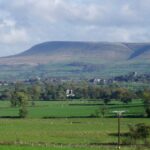
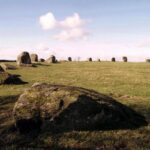
For more place-based stories, explore Rambl’s Ancient Places & Folklore collection, the Green Children of Woolpit, Long Meg and Her Daughters and the Pendle Witches.