Most Beautiful Churches in the English Countryside
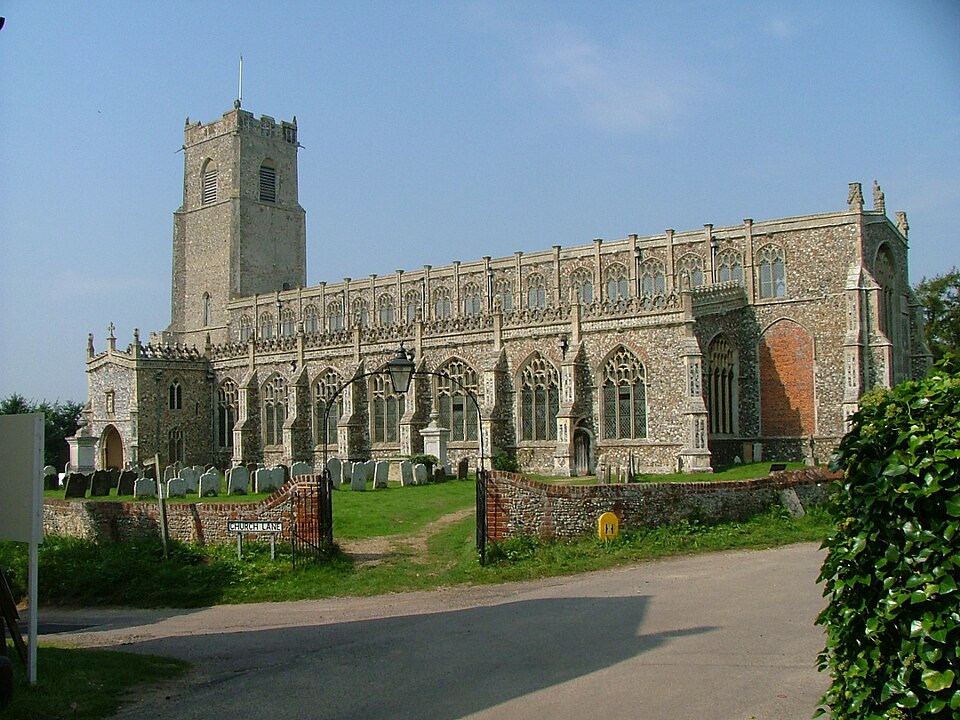
The most beautiful churches in the English countryside range from tiny timber buildings to vast wool churches that seem extravagantly large for their villages. A hamlet with twelve cottages and a tower fit for a small city is one of the countryside’s better surprises. Inside, you find medieval carving, local legends, old memorials and the marks left by generations of ordinary people.
Quick picks
| Church | Best for | County |
|---|---|---|
| Holy Trinity, Blythburgh | Light, scale and Suffolk atmosphere | Suffolk |
| St Mary and St David, Kilpeck | Norman carving | Herefordshire |
| Greensted Church | Ancient timber construction | Essex |
| St Mary, Kempley | Medieval wall paintings | Gloucestershire |
| St Martin, Martindale | A remote Lake District setting | Cumbria |
Why countryside churches matter
Parish churches were built for worship, but they also acted as landmarks, meeting places, burial grounds and records of local wealth. Their walls carry the ambitions of patrons alongside scratched initials, worn thresholds and monuments to families who never appeared in national histories.
Many remain active places of Christian worship. Visitors are welcome at most, but silence, services and private prayer take priority over photography. Leave a donation where possible: old roofs possess an unchristian appetite for money.
1. Holy Trinity Church, Blythburgh
Holy Trinity stands above the Suffolk marshes near the River Blyth. Known as the Cathedral of the Marshes, it has a tall nave, large windows and an airy Perpendicular Gothic interior that feels surprisingly luminous.
Carved angels decorate the hammer-beam roof, while surviving medieval details reward a slow circuit. The church is also associated with the legend of Black Shuck: marks on the north door have long been linked in folklore with the spectral dog’s supposed appearance during a storm in 1577.
Our Black Shuck article separates the documented account from the legend that grew around it.
2. St Mary and St David, Kilpeck
Kilpeck Church is a small 12th-century building famous for the extraordinary survival of its Romanesque sculpture. Carved corbels show animals, human figures and strange hybrid creatures, while the south doorway is wrapped in intricate stone ornament.
The imagery has attracted many interpretations, some more confident than the evidence permits. It is safest to appreciate the craftsmanship, symbolism and mystery without pretending every weathered creature comes with a neat modern label.
3. Greensted Church, Essex
St Andrew’s at Greensted is celebrated for its ancient timber nave, constructed from split oak logs standing vertically. The exact dating and interpretation of different phases have been debated, but the church is widely recognised as an exceptional survival of early medieval timber building.
Later additions show how a parish church develops rather than remaining frozen in one century. Its modest size and wooded churchyard make the survival feel more remarkable, not less.
4. St Mary’s Church, Kempley
Old St Mary’s at Kempley contains an important scheme of medieval wall paintings, including Romanesque work in the chancel. The simple exterior gives little warning of the colour and imagery inside.
The building is cared for by English Heritage and has limited facilities. Check access arrangements before travelling, and avoid touching painted surfaces or using flash where restrictions apply.
5. St Martin’s Church, Martindale
Old St Martin’s stands in a quiet valley above Ullswater, surrounded by fells and old yews. The small whitewashed church has a simplicity suited to its remote setting, although parts of the building have been altered over centuries.
Reach it on foot as part of a Martindale walk or a slower exploration of Ullswater. Roads are narrow and public transport limited, so plan carefully and do not treat a tiny valley lane as an improvised car park.
6. St Michael and All Angels, Hawkshead
Hawkshead’s parish church occupies raised ground above the Lake District village. The present building reflects substantial work from the late medieval and early modern periods, with a broad interior, painted texts and monuments connected to local families.
The churchyard and terrace offer views towards the surrounding fells. Combine it with the village lanes, nearby woodland or Tarn Hows. Our guide to the best Lake District villages explains why Hawkshead works well for a quieter break.
7. St Peter and St Paul, Salle
Salle Church rises on a grand scale above a small Norfolk village. Built largely in the 15th century, it reflects wealth associated with the region’s wool trade and powerful local families.
Its tower, spacious nave, screens and monuments make it one of East Anglia’s great rural churches. The mismatch between settlement and building is part of the fascination: medieval prosperity has left a stone landmark far larger than modern population alone would suggest.
8. St Mary’s Church, Fairford
Fairford is renowned for its complete sequence of late medieval stained glass. The windows survived religious change, civil conflict and restoration, presenting biblical scenes, saints, angels and moral imagery across the church.
Bright conditions reveal the colour most clearly, but allow time to study individual panels rather than attempting to absorb the entire scheme in one reverent blur.
9. St Michael’s Church, Coxwold
Coxwold’s church is distinctive for its octagonal west tower and its connections with the Belasyse family. Inside are elaborate monuments, while the village itself forms one of the most handsome approaches to the North York Moors.
Nearby Shandy Hall was associated with Laurence Sterne, author of Tristram Shandy. Together, village, church and literary history make Coxwold worth more than a passing photograph.
10. St Bartholomew’s, Much Marcle
This Herefordshire church contains medieval work, notable tombs and the celebrated yew known as the Much Marcle Yew. The church is also connected with Blanche Mortimer, whose 14th-century monument survives inside.
Nearby orchards and rolling countryside make it a strong autumn stop, particularly when combined with local footpaths and Herefordshire’s cider landscape.
How to visit respectfully
- Check whether a service, funeral or private event is taking place.
- Keep voices low and phones silent.
- Ask before using a tripod or photographing people.
- Do not climb on tombs, screens or ancient furniture.
- Leave a donation or buy a guidebook where possible.
- Close gates and doors as requested.
Planning a church-focused countryside break
East Anglia is particularly rich in medieval parish churches, while Herefordshire and the Welsh borders offer remarkable Norman carving and quiet villages. The Cotswolds combine wool churches with market towns; Cumbria adds dramatic landscape and smaller buildings rooted in remote communities. For a longer heritage day, pair a church visit with one of England’s great monastic sites in our guide to the best ruined abbeys to visit in England, or browse our wider historic houses guide.
Build the day around three or four churches at most, allowing for a walk, lunch and unexpected locked doors. Volunteer-run buildings cannot maintain museum hours, and impatience has never yet opened a medieval porch.
If you want to turn the theme into a longer day out, pair these churches with Rambl’s guide to the best ruined abbeys to visit in England. For a particularly atmospheric Yorkshire example, our Fountains Abbey guide covers the abbey, landscape and practical visitor planning.
Explore churches, abbeys and old places
Follow Rambl into historic villages, ruined monasteries and landscapes where Britain’s past is still visible.
Explore historic places