The Pendle Witches
What Really Happened in 1612
Behind the broomsticks and gift-shop souvenirs is a much darker story.
The Pendle witch trials are one of the most famous witch stories in British history. But behind all the pointed hats and tea towels is a story about poverty, fear, family arguments, and a court willing to accept the word of a nine-year-old child.
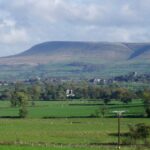
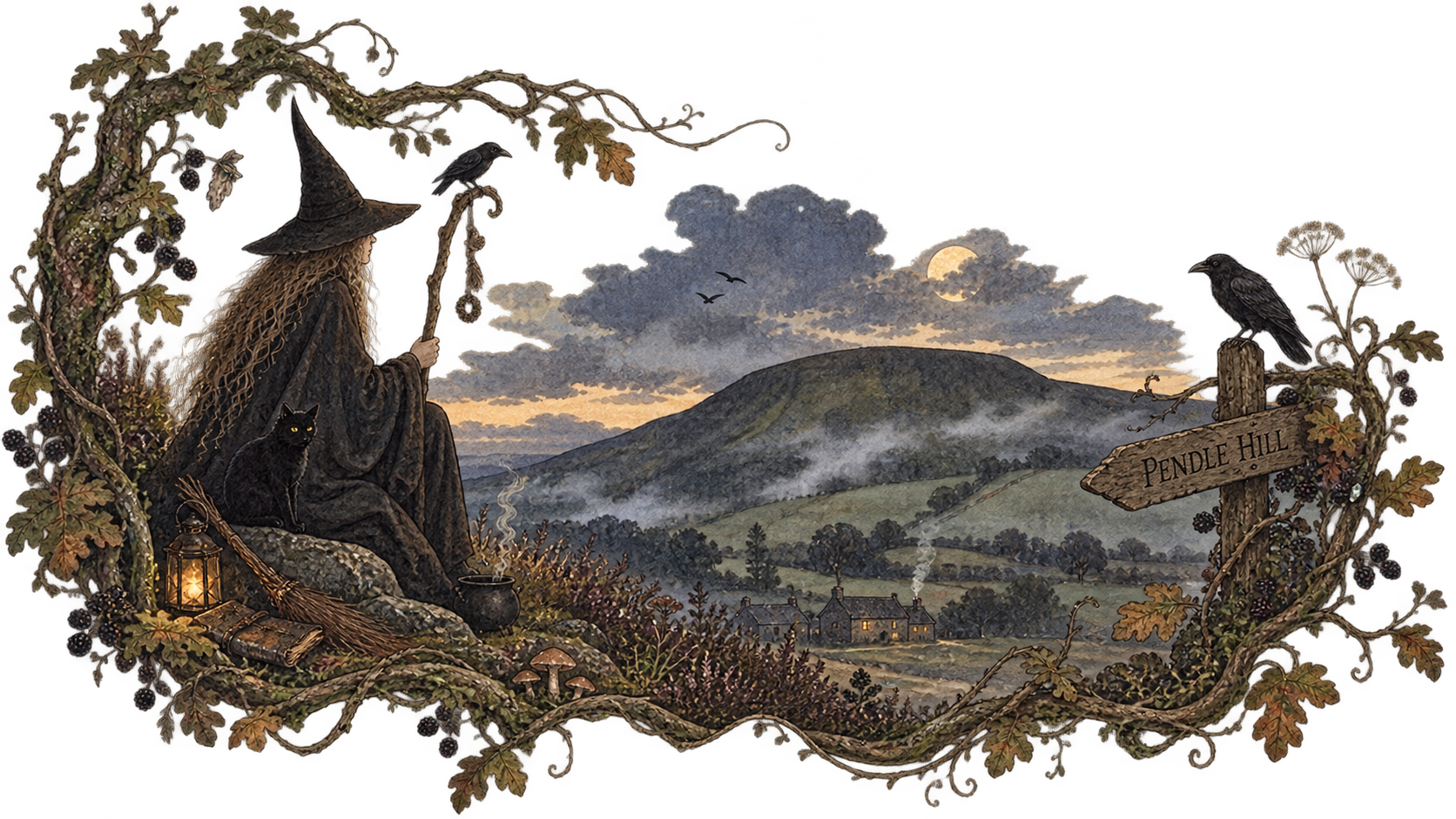
Pendle Hill rises above the Lancashire countryside, surrounded by old villages, isolated farms and narrow country lanes. On a sunny day, it’s beautiful. Add some fog and sideways rain, and it starts to look like somewhere you probably shouldn’t accept an apple from an elderly stranger.
Today, witches appear everywhere around Pendle, from walking trails and road signs to shop windows and souvenirs. But the real story was never about women flying around the hill on broomsticks. It began with two poor families, several old grudges, a travelling salesman who suddenly collapsed, and local officials who believed witchcraft was entirely real.
In 1612, twelve people connected with the area were accused. One died in prison, one was found not guilty, and ten were hanged. Whether any of them would have called themselves witches is another matter entirely.
Pendle in 1612
Pendle in the early 1600s was poor, remote and difficult to travel around. Families lived in scattered farms and small settlements, medical help was limited, and sudden illness often had no obvious explanation. That made magic an easy answer.
If someone became ill after an argument, people might believe a curse was responsible, and this wasn’t only a belief held by villagers. Judges, priests, landowners and King James I all believed witchcraft was real. James had even written a book about witches and demons, so he wasn’t exactly encouraging anyone to remain calm about it.
A Witchcraft Act passed in 1604 made causing death through witchcraft punishable by hanging. Lancashire was also treated with suspicion because Catholicism remained strong in parts of the county, only a few years after the Gunpowder Plot. It was not, in short, the ideal setting for a fair investigation into supernatural murder.
The Two Families at the Centre of It
At the heart of the story were two elderly women. Elizabeth Southerns was known as Old Demdike, while Anne Whittle was called Old Chattox. Both were probably around eighty and had local reputations for healing, charms and folk magic. Their families were poor, and they did not get on.
Demdike lived with her daughter Elizabeth Device and her grandchildren Alizon, James and Jennet. Chattox’s family included her daughter, Anne Redferne. For years, the two sides blamed each other for illnesses, deaths and bad luck. Old arguments were repeated until it became difficult to tell where fact ended and village gossip began.
Demdike and Chattox may have used herbs, prayers or charms in exchange for food or money, and in a place with little access to doctors, that was not unusual. The problem was that the same person people visited for help could quickly become the person they blamed when the help failed. It was not, by any measure, the most secure line of work.
The Argument Over Some Pins
The case began in March 1612, when Alizon Device met a travelling pedlar named John Law near Colne. She asked him for some pins. He refused. Shortly afterwards, Law collapsed. He reportedly lost movement down one side of his body and struggled to speak, which to a modern reader sounds very much like a stroke.
Alizon believed she had caused it. According to the later court account, she said a spirit in the shape of a black dog had offered to harm Law, and she had agreed. When she was taken to see him, she confessed and asked for forgiveness. John Law appears to have forgiven her. His son Abraham was less interested in a touching reconciliation and reported her to the local magistrate, Roger Nowell.
Nowell questioned Alizon, and she accused members of her own family and the rival Chattox family. That was when one strange roadside incident became something much larger. Old deaths, illnesses and arguments were suddenly treated as evidence, and once witchcraft had been accepted as the explanation, almost any piece of bad luck could be made to fit.
Malkin Tower and the Arrests
Alizon, Demdike, Chattox and Anne Redferne were arrested and taken to Lancaster Castle. Then, on Good Friday, relatives and neighbours gathered at the Device family home, known as Malkin Tower. Despite the name, it was probably a simple farmhouse or cottage, and its exact location is still uncertain.
The group shared a meal and apparently discussed helping the imprisoned women. The prosecution claimed there was talk of attacking Lancaster Castle to free them. Whether anyone seriously planned this is impossible to know, it may have been an angry family conversation that became more dramatic during questioning. To the authorities, though, it looked like a witches’ meeting.
James Device and his younger sister Jennet were questioned about who had attended. Their statements led to more arrests. A family gathering had become evidence of an organised coven.

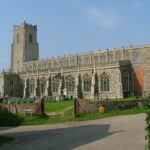
Lancaster Castle, where the Pendle accused were imprisoned and tried in 1612.
The Trial at Lancaster Castle
The accused spent months in Lancaster Castle, where the cells were cold, damp and unhealthy. Old Demdike died before the trial began, and given her age and the prison conditions, her death needed no supernatural explanation.
The trials took place in August 1612. The defendants had no proper defence lawyers and faced judges who already believed witchcraft was real. The key witness was Jennet Device, who was about nine years old. Jennet gave evidence against her own mother, brother, sister and several others, and was reportedly placed on a table so the court could see and hear her.
Nine people connected with Pendle were hanged near Lancaster on 20 August 1612. Jennet Preston had already been tried separately and hanged at York. Alice Grey was found not guilty. They were hanged, not burned, burning witches is common in films, but people convicted of witchcraft in England were generally executed by hanging.
Were They Really Witches?
There is no credible evidence that the Pendle accused had supernatural powers, summoned demons, or killed anyone using magic. Some may have believed they could perform charms or curses, Alizon seems to have genuinely believed she had harmed John Law. But believing you have magical powers doesn’t make those powers real.
It’s also too simple to describe every accused person as a harmless healer persecuted only for being different. They were real, complicated people. Some may have threatened neighbours or encouraged their mysterious reputations because it brought food or protection. Others were probably dragged into the case because they belonged to the wrong family or attended the wrong gathering. They were not members of a proven coven. What they shared was vulnerability, poverty, age, family reputation, and a badly timed argument could all be turned into evidence against them.
Not every English witch legend ends in tragedy. Our look at Long Meg and Her Daughters covers a coven turned to stone by an angry wizard rather than facing a real trial, a considerably gentler fate than Pendle’s.
How Pendle Became Witch Country

The story survived because court clerk Thomas Potts published a detailed account of the trials. His book gave later writers a full cast of characters, dramatic confessions, spirits and a mysterious gathering at Malkin Tower. It was, in every sense, perfect material for legend.
Today, Pendle’s witch story appears in walking trails, statues, signs and local businesses. Lancaster Castle remains the clearest physical link, while Roughlee, Newchurch-in-Pendle and the surrounding villages all form part of the modern story. Malkin Tower itself has never been found with certainty. Sometimes history leaves behind a castle. Sometimes it leaves a field, several theories, and a surprising number of souvenir tea towels.
There’s nothing wrong with enjoying the folklore, it has helped keep the story alive for more than four centuries. But the Pendle witches were not Halloween characters. They were mothers, daughters, sons, neighbours and elderly women who were tried by a system that gave them almost no chance of defending themselves.
The most frightening part of the story isn’t that witches might once have lived beneath Pendle Hill. It’s that the courts believed they had found them. The story now belongs to British folklore. But it began with real people, living in a real landscape, who were accused of impossible crimes. And the truth is darker than the legend.
FAQs
How many Pendle witches were executed?
Ten people connected with the Pendle case were hanged in total, nine near Lancaster on 20 August 1612, and Jennet Preston separately at York. One of the accused, Old Demdike, died in prison before trial, and Alice Grey was found not guilty.
Where is Malkin Tower?
Its exact location has never been confirmed with certainty. It’s generally believed to have been a farmhouse or cottage somewhere in the Pendle area rather than an actual tower, despite the name.
Were the Pendle witches real witches?
There’s no credible evidence any of the accused had genuine supernatural powers. Some may have believed in or practised folk charms and healing, which was common at the time, but the confessions and accusations that led to their executions don’t hold up as evidence of actual witchcraft.
Can you visit Pendle Hill and the related sites today?
Yes. Pendle Hill itself is open for walking, and villages including Roughlee and Newchurch-in-Pendle form part of the wider trail. Lancaster Castle, where the accused were tried and held, is also open to visitors.