Best Gardens in England: 12 Great Gardens for a Day Out
The best English gardens are not all flower borders and clipped hedges. Some are huge estates built around lakes and carefully planned views; others are packed with planting, walled gardens or unusual collections. What makes them interesting is how differently they use the same basic ingredients: ground, water, trees, walls and a great deal of patience.
12 gardens to put on the list
| Garden | Area | Best for |
|---|---|---|
| Stourhead | Wiltshire | Landscape garden and lake |
| Sissinghurst | Kent | Garden rooms and planting |
| Hidcote | Gloucestershire | Arts-and-Crafts garden rooms |
| Great Dixter | East Sussex | Bold, influential planting |
| RHS Garden Wisley | Surrey | Horticultural range |
| Kew Gardens | London | Botanical collections |
| Chatsworth Garden | Derbyshire | Historic layers and estate setting |
| Studley Royal | North Yorkshire | Water garden and abbey ruins |
| Rousham | Oxfordshire | Early landscape design |
| Wrest Park | Bedfordshire | Formal garden history |
| Hestercombe | Somerset | Multiple garden periods |
| Trentham Gardens | Staffordshire | Large-scale contemporary planting |
1. Stourhead, Wiltshire
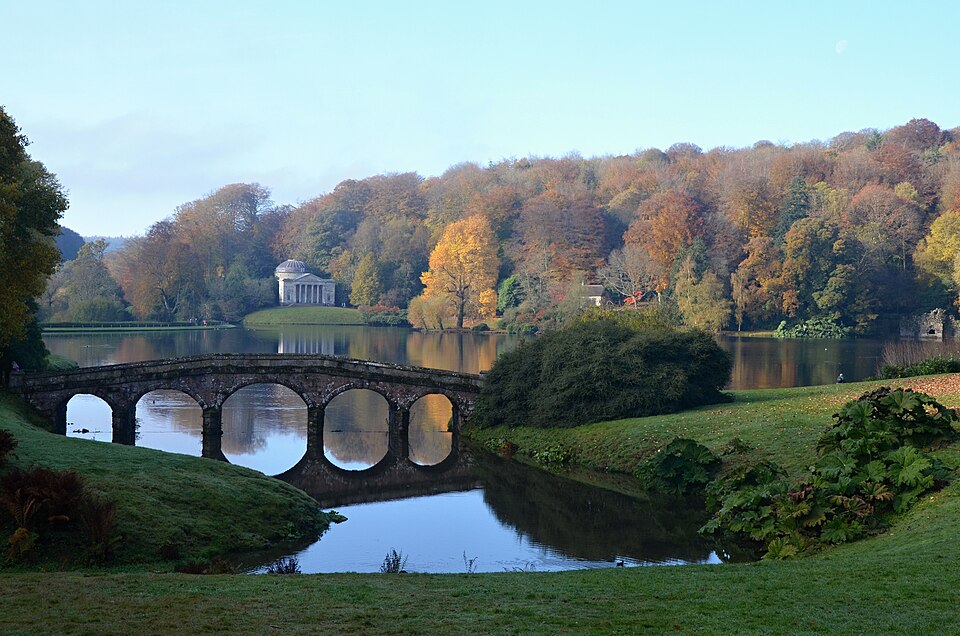
Stourhead is one of England’s great eighteenth-century landscape gardens. The lake, temples, bridge and views were all planned to appear at the right moment as you walk. It is basically theatre made out of trees and water, except the stage takes a couple of miles to cross.
Our Stourhead guide covers the history, estate walk and what to look for around the lake.
2. Sissinghurst, Kent
Sissinghurst’s fame rests on the series of distinct garden rooms created by Vita Sackville-West and Harold Nicolson. Walls and hedges divide the space, allowing each area to develop a strong character. The White Garden gets the headlines, as white flowers apparently have excellent publicists, but the experience works because of the sequence between rooms.
3. Hidcote, Gloucestershire
Hidcote is another masterclass in garden rooms, developed by Lawrence Johnston in the twentieth century. Formal structure contains exuberant planting, while openings and long views prevent the garden from feeling boxed in. It is an obvious companion to a north-Cotswolds weekend; our guide to the best villages in the Cotswolds is useful if you want to turn the garden visit into a fuller day or weekend.
4. Great Dixter, East Sussex
Great Dixter is associated with gardener and writer Christopher Lloyd and remains known for adventurous combinations of plants. The house provides a historic anchor, but this is a place to look at planting rather than simply architecture. It changes dramatically through the seasons.
5. RHS Garden Wisley, Surrey
Wisley is useful because it does many things at once: formal gardens, experimental planting, woodland, glasshouse collections and practical horticulture. If you garden yourself, you may leave with considerably more ideas than available square footage.
6. Kew Gardens, London
Kew is a botanical garden of international importance rather than a country-house garden, but it belongs on any serious English list. Historic glasshouses, arboretum, scientific collections and landscape design make it possible to spend a full day without feeling that you have exhausted it.
7. Chatsworth Garden, Derbyshire
Chatsworth’s garden has evolved over centuries rather than being fixed in one period. Formal features, water engineering, rock garden and contemporary interventions sit within the much larger estate landscape. Read our Chatsworth guide for the house and surrounding walks too.
8. Studley Royal, North Yorkshire
Studley Royal Water Garden is extraordinary because its formal water landscape leads directly towards the ruins of Fountains Abbey. The contrast between controlled eighteenth-century design and medieval monastic ruins is one of England’s great historic landscapes. Rambl’s Fountains Abbey guide covers the wider site.
9. Rousham, Oxfordshire
Rousham is smaller and quieter than many famous gardens, but hugely important in the development of the English landscape style. William Kent’s work uses woodland, water, classical buildings and controlled views without the monumental scale of later estates.
10. Wrest Park, Bedfordshire
Wrest Park is particularly useful for seeing changing fashions in garden design because formal avenues, water and later landscape elements coexist. Long views and strong geometry make the historic structure easy to understand.
11. Hestercombe, Somerset
Hestercombe contains layers from different periods, including an eighteenth-century landscape garden and the formal garden associated with architect Edwin Lutyens and designer Gertrude Jekyll. It is effectively a walk through changing ideas about what a garden should be.
12. Trentham Gardens, Staffordshire
Trentham combines a historic Capability Brown landscape with substantial contemporary planting. It is a useful reminder that historic gardens do not have to become museum pieces; good restoration can preserve structure while allowing planting to evolve.
Planning a garden day out
- For landscape and long walks: start with Stourhead, Studley Royal or Chatsworth, and allow enough time to explore beyond the formal garden.
- For planting ideas: Sissinghurst, Great Dixter, Hidcote and Wisley reward slower wandering through individual borders and garden rooms.
- For history as well as horticulture: Chatsworth, Wrest Park and Studley Royal make particularly good choices because the wider estate is part of the story.
- Before setting off: check the garden’s own website for current opening days, access information and whether advance booking is required.
When is the best time to visit English gardens?
There is no single answer. Spring is strongest for bulbs and blossom, early summer for borders and roses, late summer for grasses and herbaceous planting, and autumn for trees and landscape gardens. Stourhead in October and Sissinghurst in June are almost different genres of day out.
Browse more at Rambl’s Gardens & Parks collection or pair a garden day with one of our best English villages.