Fountains Abbey: History and Visitor Guide
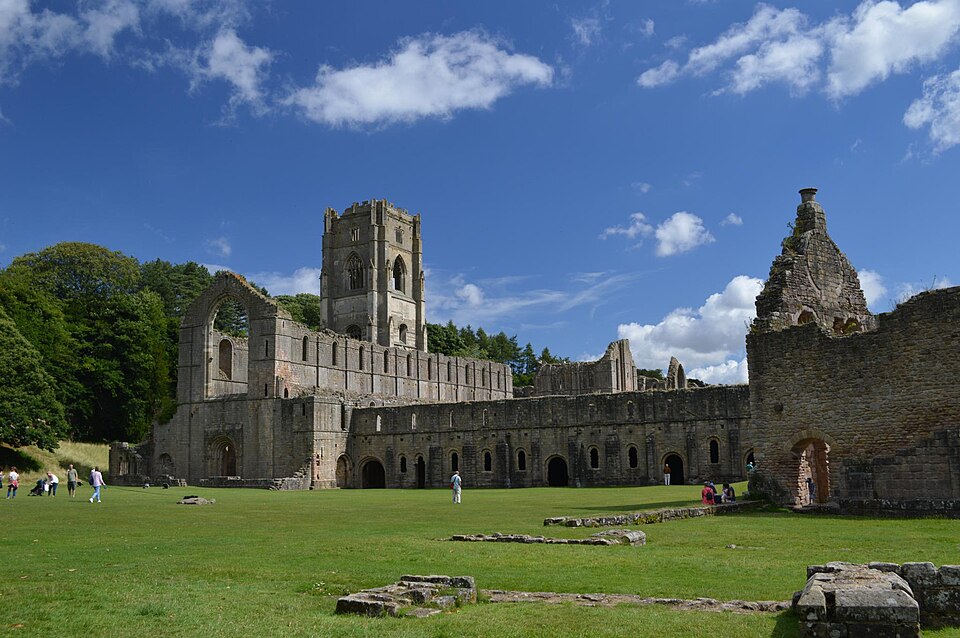
Fountains Abbey is one of Britain’s most complete and affecting monastic ruins. Its vast church and working buildings sit within the designed landscape of Studley Royal, where medieval austerity, Georgian ambition and North Yorkshire countryside meet in one unusually rewarding day out. It is a rare ruin that can comfortably fill a day without asking you to invent enthusiasm for every broken wall.
Fountains Abbey at a glance
| Founded | 1132 |
|---|---|
| Religious order | Benedictine origins; later Cistercian |
| Dissolved | 1539 |
| Landscape | Abbey ruins, water garden, parkland and deer park |
| Allow | At least half a day; longer for the full estate |
A brief history of Fountains Abbey
The abbey began in 1132 after a dispute at St Mary’s Abbey in York. Thirteen monks seeking a stricter observance left the city and established a community in the valley of the River Skell. The early settlement was harsh, but support from Archbishop Thurstan helped it survive.
In 1135 the community joined the Cistercian order. Cistercian ideals emphasised simplicity, disciplined worship and physical labour, although successful monasteries soon became major landowners and economic organisations. Fountains acquired estates, managed sheep and participated in the wool trade.
The first stone church was expanded repeatedly. Fires, financial difficulties and political upheaval affected the abbey, but by the later Middle Ages it remained wealthy and architecturally impressive. Abbot Marmaduke Huby, who governed from 1495 to 1526, commissioned the great tower that still dominates the ruins.
The Dissolution and what happened next
Fountains was surrendered to Henry VIII’s commissioners in 1539 during the Dissolution of the Monasteries. Its community was dispersed and the estate passed into private ownership. Valuable roofs, fittings and materials were removed, but the substantial stone fabric survived.
In the 18th century the neighbouring Aislabie family developed Studley Royal Water Garden. Rather than hide the medieval ruin, the designed landscape used it as a dramatic destination and carefully framed view. The result is why Fountains feels so complete today: monastery and landscape are read together.
What to look for in the abbey ruins
The abbey church
The church reveals the enormous scale of the medieval community. Stand in the nave and look east towards the presbytery, then back towards Huby’s Tower. Changes in masonry and style show how the building evolved rather than appearing from one perfect medieval plan.
The cellarium
The vaulted cellarium is among the site’s most memorable surviving spaces. It formed part of the range used by lay brothers, who handled much of the monastery’s agricultural and practical work. Its long stone vaults also provide useful shelter, something medieval architecture and Yorkshire weather have arranged between them.
The cloister and chapter house
The cloister was the organising heart of the monastery, linking the church with communal rooms. The chapter house was where monks met daily for readings, discipline and administration. Tracing these spaces helps turn isolated walls into a functioning institution.
The infirmary and mill
The infirmary served sick and elderly members of the community. The surviving mill, with later alterations, reflects the practical infrastructure required to sustain a large house. Monasteries were spiritual centres, but also complex estates requiring water, food, storage and skilled labour.
Studley Royal Water Garden
Walk downstream from the abbey and the landscape changes from medieval enclosure to Georgian theatre. The Aislabies shaped the valley using canals, ponds, cascades, statues and carefully controlled viewpoints.
Look back through openings and across the water to see how the abbey was incorporated into the design. Octagon Tower, the Temple of Piety and Anne Boleyn’s Seat form part of a sequence intended to be experienced on foot.
How long do you need?
Two hours is enough for a focused look at the ruins, but it would be a shame to rush. Allow four to five hours for the abbey and water garden, and most of a day if adding the deer park, St Mary’s Church, longer estate paths and an unhurried stop for food.
The site involves substantial walking and changes of level. Accessible routes and transport assistance may be available, but conditions and services can change; consult current National Trust access information before visiting.
Best time to visit Fountains Abbey
Spring brings fresh growth and longer days. Summer offers the broadest opening arrangements but also the largest crowds. Autumn suits the wooded valley particularly well, while low winter light can emphasise the abbey’s architecture.
Arrive close to opening time for quieter ruins. Overcast weather works surprisingly well for photography, bringing out texture in the stone without harsh shadows.
Practical planning
- Check official opening times, admission and parking before travelling.
- Wear comfortable footwear suited to paths, grass and old stone.
- Bring layers; the valley and roofless ruins can feel cold.
- Allow more time than the map initially suggests.
- Do not climb or sit on fragile masonry.
Fountains Abbey works well as part of a Yorkshire Dales break. Ripon is the nearest city, while Masham, Pateley Bridge and Grassington provide countryside bases farther out. See Rambl’s guide to the best Yorkshire Dales villages, the wider collection of ruined abbeys in England, and our guide to beautiful churches in the English countryside for more historic places worth building a trip around.
Is Fountains Abbey worth visiting?
Yes, particularly if you enjoy architecture, landscape history or places that reward walking rather than a quick photograph. The abbey is impressive in isolation; combined with Studley Royal, it becomes a layered record of how successive centuries reused and reimagined the same valley.
Explore more historic Britain
Find abbeys, castles, churches and ancient landscapes through Rambl’s growing collection of places and stories.
Explore Britain