Best Autumn Walks in the Peak District
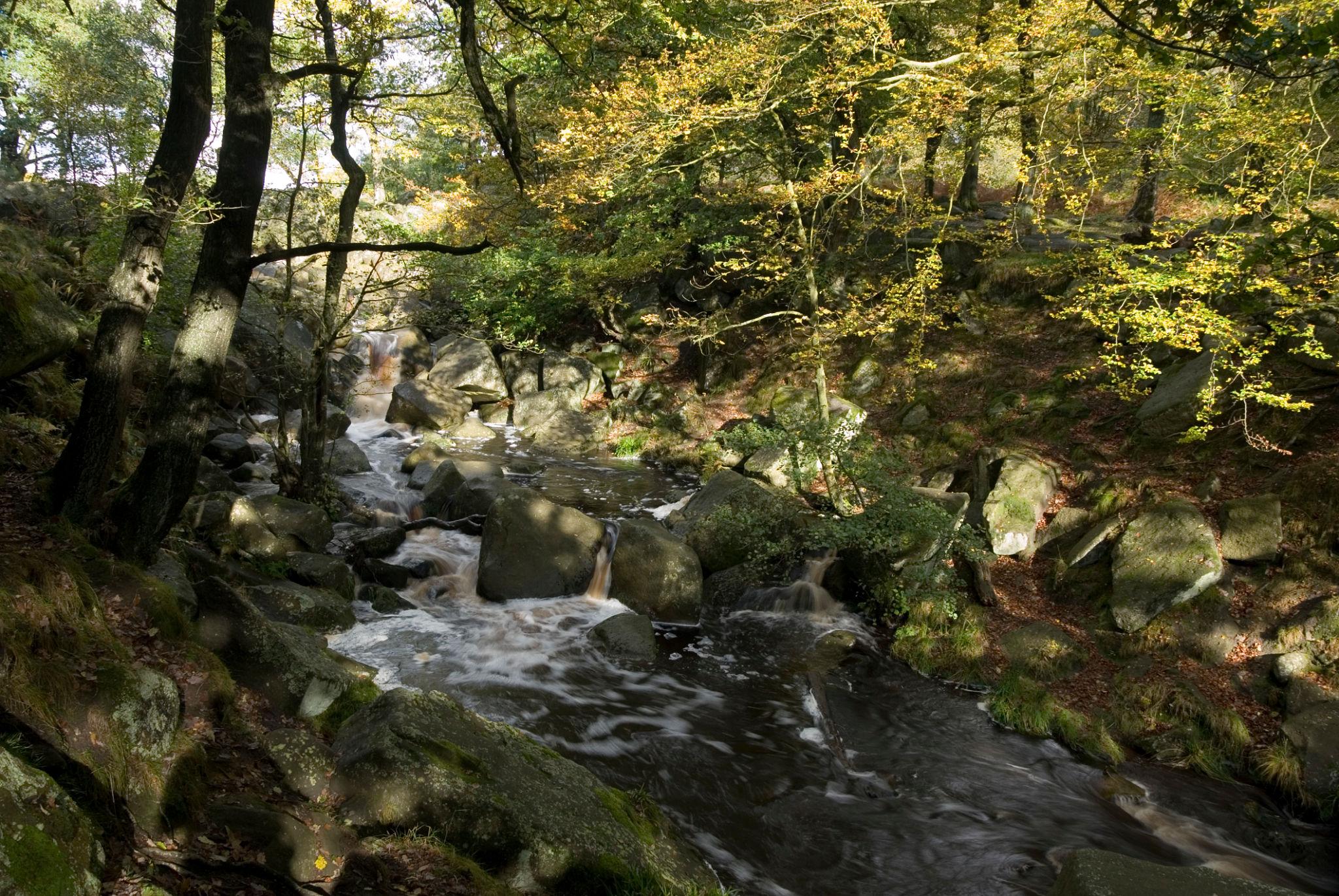
The best autumn walks in the Peak District range from copper woodland in Padley Gorge to the airy Great Ridge above Castleton. This is a season of low light, quieter paths and very convincing mud, so the right route depends as much on the forecast as the view.
Quick picks
| Walk | Best for | Effort |
|---|---|---|
| Padley Gorge | Woodland colour and tumbling water | Easy–moderate |
| Mam Tor and Great Ridge | Wide views and a classic ridge | Moderate |
| Stanage Edge | Gritstone drama and sunsets | Moderate |
| Chrome Hill | A distinctive limestone landscape | Moderate–hard |
| Kinder Scout | A full moorland day | Hard |
Why walk the Peak District in autumn?
The Dark Peak’s gritstone edges look particularly handsome beneath autumn skies, while sheltered cloughs and estates gather colour from oak, birch and beech. September can still bring long, mild days; October usually offers the strongest woodland display; November is quieter and moodier, with considerably less daylight. The mud, meanwhile, considers itself a year-round attraction.
Conditions change quickly on open moorland. Low cloud can remove landmarks, rain swells streams and wet gritstone becomes less obliging. Check the forecast, start earlier than you would in summer and keep a valley alternative ready.
1. Padley Gorge and the Longshaw Estate
Padley Gorge is the obvious autumn choice and deserves its popularity. Burbage Brook runs through old woodland beneath twisted oaks, mossy boulders and slopes thick with fallen leaves. Extend the walk onto the Longshaw Estate for open parkland and wider views.
The gorge paths are rocky, rooty and slippery after rain. A short loop works well for families and photographers; a longer circuit towards Grindleford or Burbage adds variety. Visit early on a weekday if possible, because a peaceful wood is harder to appreciate when half of Sheffield has had precisely the same idea.
2. Mam Tor and the Great Ridge
The Mam Tor circuit follows one of England’s best-known ridges, looking across Edale on one side and Castleton’s limestone country on the other. Autumn brings soft light to the valley fields and bracken, while cooler air makes the climbing more comfortable.
Despite the paved path near Mam Tor, the full ridge remains exposed to wind. A circular route through Castleton or Hope provides a satisfying day, but shorten it if cloud or strong gusts arrive. The ridge is popular at sunrise and sunset; carry a headtorch if using the edges of daylight.
3. Stanage Edge
Stanage Edge offers miles of gritstone escarpment above the Hope Valley. Heather, bracken and rough pasture shift towards muted bronze as the season advances, and the west-facing edge can catch excellent late light.
There are many access points, allowing anything from a short edge walk to a longer circuit via Hathersage. Stay back from drops in wind or poor visibility and remember that climbers may be working below. Hathersage makes a useful base for cafés, trains and a warm conclusion.
4. Chatsworth and Edensor
For a gentler day, walk through Chatsworth park and the estate village of Edensor. Veteran trees, the River Derwent and views of the house create a particularly English autumn scene, Capability Brown landscaping, sheep and the occasional deer looking as though it owns the place.
Public rights of way cross the estate, but access arrangements and paid areas can change, so check current visitor information. Combine the park with nearby Baslow for a longer circuit and allow time for the village churchyard and its historic monuments.
5. Dovedale and the Manifold Valley
Dovedale’s limestone gorge brings woodland colour close to the River Dove. The famous stepping stones are only the beginning: walking farther north reveals quieter riverside paths, caves and steep-sided dale scenery.
Water levels matter. The stones and riverside sections may be unsuitable after heavy rain, and polished limestone can be treacherous. For a less crowded alternative, explore the Manifold Valley or combine Wetton with Thor’s Cave, taking particular care on the steep, slippery approach.
6. Chrome Hill and Parkhouse Hill
The sharp limestone profiles of Chrome Hill and Parkhouse Hill look unlike much else in the national park. Autumn sun catches the ridges and surrounding fields beautifully, making this one of the Peak District’s most photogenic shorter hill days.
The route includes steep grass, narrow ground and sections that feel much more serious when wet. It is not a wet-weather fallback. Choose a calm, dry day, follow rights of way carefully and avoid damaging field edges or blocking local lanes.
7. Kinder Scout from Edale
Kinder Scout supplies the full Dark Peak experience: steep cloughs, peat paths, broad plateau country and views that can disappear between one sandwich and the next. Autumn can be superb, particularly when low sun picks out the moorland texture.
This is a navigationally demanding day in mist. Paths are wet, peat can be deep and stream crossings become harder after rain. Carry a proper map, compass and headtorch, and save Kinder for a forecast that gives you a fair chance of seeing it.
What to carry
- Waterproof jacket and spare warm layer
- Boots or shoes with dependable wet-ground grip
- Map and compass for moorland routes
- Headtorch and charged phone
- Food, water and a flask if you enjoy smug efficiency
Our waterproof overtrousers guide is useful for properly wet forecasts, while the free hiking checklist covers the essentials.
Where to stay for an autumn weekend
Hathersage suits Stanage and Padley Gorge; Castleton and Hope are well placed for Mam Tor; Edale gives immediate access to Kinder. Bakewell is a comfortable base for Chatsworth and the southern dales. Compare them in our guide to the best places to stay in the Peak District for walking.
For a ready-made plan, use the two-day Peak District itinerary, or browse the complete collection of Peak District walks.
Plan a Peak District escape
Explore Rambl’s village bases, practical routes and weekend ideas for making more of the national park in every season.
Explore Britain