Best Ruined Abbeys to Visit in England
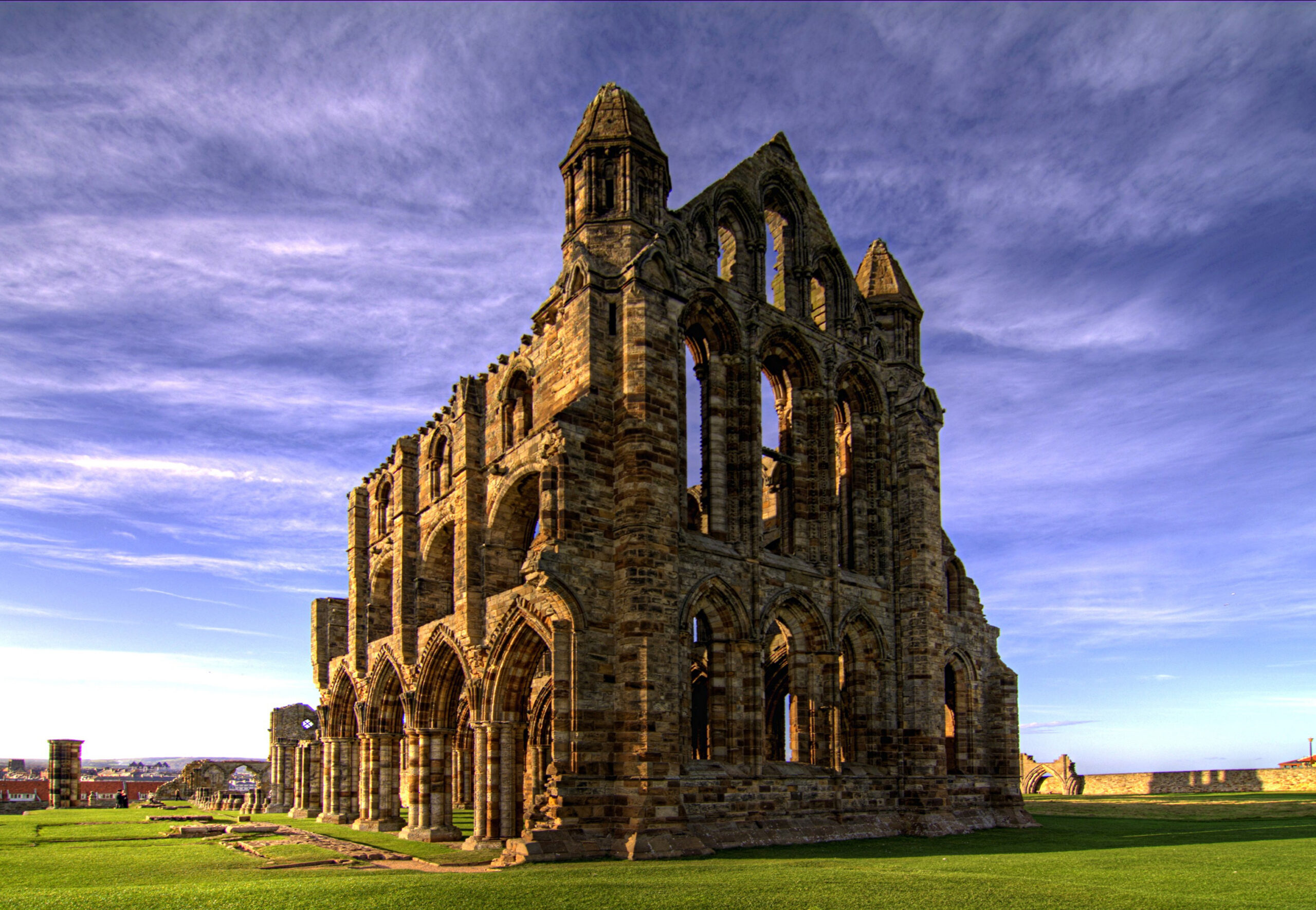
England’s best ruined abbeys are not merely picturesque shells. They preserve the scale of medieval religious life, the shock of the Dissolution and centuries of later reinvention, often in landscapes where a long walk is as rewarding as the ruins themselves.
Quick picks
| Abbey | Best for | County |
|---|---|---|
| Fountains Abbey | Scale, landscape and a full day out | North Yorkshire |
| Rievaulx Abbey | A secluded valley setting | North Yorkshire |
| Whitby Abbey | Coastal drama and early Christian history | North Yorkshire |
| Tintern Abbey | Gothic architecture beside the Wye | Monmouthshire |
| Glastonbury Abbey | Legend, pilgrimage and royal history | Somerset |
Why are so many English abbeys ruined?
Most of England’s great monastic ruins owe their present condition to the Dissolution of the Monasteries under Henry VIII between 1536 and 1541. Religious houses were closed, their land and valuables transferred to the Crown, and many buildings were stripped for lead, timber and reusable stone. Tudor government, it is fair to say, was not sentimental about fixtures and fittings.
That is the broad explanation, not the whole story. Some sites became private houses; others served farms, workshops or parish communities. Centuries of weather, stone-robbing and romantic landscaping shaped the ruins visitors see today.
1. Fountains Abbey, North Yorkshire
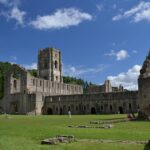
Fountains began in 1132 when a group of Benedictine monks from York sought a stricter religious life. The community joined the Cistercian order and developed one of medieval England’s wealthiest monasteries, supported by estates, sheep farming and trade.
The surviving church, cellarium and monastic ranges sit within the Studley Royal landscape, where 18th-century water gardens create long, theatrical views. Allow several hours and wear walking shoes: this is a landscape to cross, not a monument to glance at before returning to the car. For a closer look at the site, see our Fountains Abbey history and visitor guide.
2. Rievaulx Abbey, North Yorkshire
Founded in 1132, Rievaulx became the first Cistercian abbey in northern England and flourished under Abbot Aelred. Its remains occupy a sheltered valley below the North York Moors, with high church walls rising above meadows and trees.
The terrace above the abbey offers one of the classic designed views, while paths connect towards Helmsley. Visit early or late in the season for quieter ruins and lower light. Opening hours and admission vary, so check English Heritage information.
3. Whitby Abbey, North Yorkshire
Whitby’s headland has been associated with Christian worship since the seventh century, when a monastery led by St Hild hosted the Synod of Whitby in 664. The standing Gothic ruins belong to the later Benedictine abbey established after the Norman Conquest. If atmospheric sacred places appeal, Rambl’s guide to the most beautiful churches in the English countryside continues the theme.
The abbey overlooks the harbour and North Sea above the 199 steps. Its setting has also become inseparable from Bram Stoker’s Dracula, though the real history is more substantial than the souvenir bats might suggest.
4. Byland Abbey, North Yorkshire
Byland was a major Cistercian house whose church helped develop architectural ideas later seen at York Minster. The west front retains a striking rose-window opening, while the plan of the church and cloister remains readable at ground level.
The site is quieter than nearby Fountains or Rievaulx and works well as part of a heritage weekend around Helmsley, Sutton Bank and the Howardian Hills. Check current access and facilities before setting out.
5. Furness Abbey, Cumbria
Furness Abbey was founded in the 12th century and grew wealthy through land and iron interests. Its red sandstone ruins stand in a wooded valley near Barrow-in-Furness, their colour quite unlike the pale limestone of many Yorkshire houses.
The location makes it a useful addition to a south Cumbria trip, particularly for travellers combining coast, industrial history and the quieter fringes of the Lake District.
6. Waverley Abbey, Surrey
Founded in 1128, Waverley was the first Cistercian monastery established in England. Its low ruins stand beside the River Wey in water meadows, creating a peaceful site where the monastic plan rewards slow exploration.
Flooding and wet ground can affect access, and facilities are limited. Pair it with a walk along the Wey or nearby Farnham rather than expecting a large visitor attraction.
7. Netley Abbey, Hampshire
Netley preserves substantial walls from a Cistercian abbey founded in 1239. After the Dissolution, parts were converted into a fashionable house; later, the ivy-covered ruin attracted artists, writers and antiquarians fascinated by Gothic melancholy.
Its position near Southampton makes it accessible, though the surrounding urban area differs from the secluded setting people may imagine from romantic paintings.
8. Glastonbury Abbey, Somerset
Glastonbury’s ruins occupy a site of immense religious and legendary significance. The medieval abbey promoted associations with Joseph of Arimathea and King Arthur, while documented history includes a powerful Benedictine monastery and the supposed discovery of Arthur’s grave in 1191.
History and legend must be separated carefully, but both shaped Glastonbury’s identity. The grounds, abbey museum and surviving structures deserve more time than a quick circuit.
9. Battle Abbey, East Sussex
Battle Abbey was founded by William the Conqueror on or near the site of the Battle of Hastings. Although later buildings survive alongside ruins, the abbey church itself is represented largely through foundations and interpretation.
The attraction lies in combining monastic history with the battlefield landscape of 1066. Allow time for the full circuit and remember that the most important feature is the ground itself, not only what remains standing.
10. Jervaulx Abbey, North Yorkshire
Jervaulx was a Cistercian house founded in the 12th century and became associated with sheep farming and cheese production in Wensleydale. Its low, peaceful ruins retain the outlines of the church, cloister and domestic ranges.
The privately managed site has an informal character, with wild planting softening the stonework. Opening and payment arrangements may differ from larger staffed attractions, so check current information before travelling.
Planning a visit
- Check official opening times, admission and conservation closures.
- Wear sturdy footwear; medieval floors are rarely level.
- Allow time for the wider landscape and nearby rights of way.
- Use interpretation panels, guidebooks or audio tours to understand the surviving plan.
- Do not climb masonry or remove stone, however conveniently souvenir-shaped.
Explore Britain’s historic places
Discover castles, churches, ancient landscapes and the stories rooted in them through Rambl’s growing countryside collection.
Explore historic Britain