Last reviewed and updated: April 2026
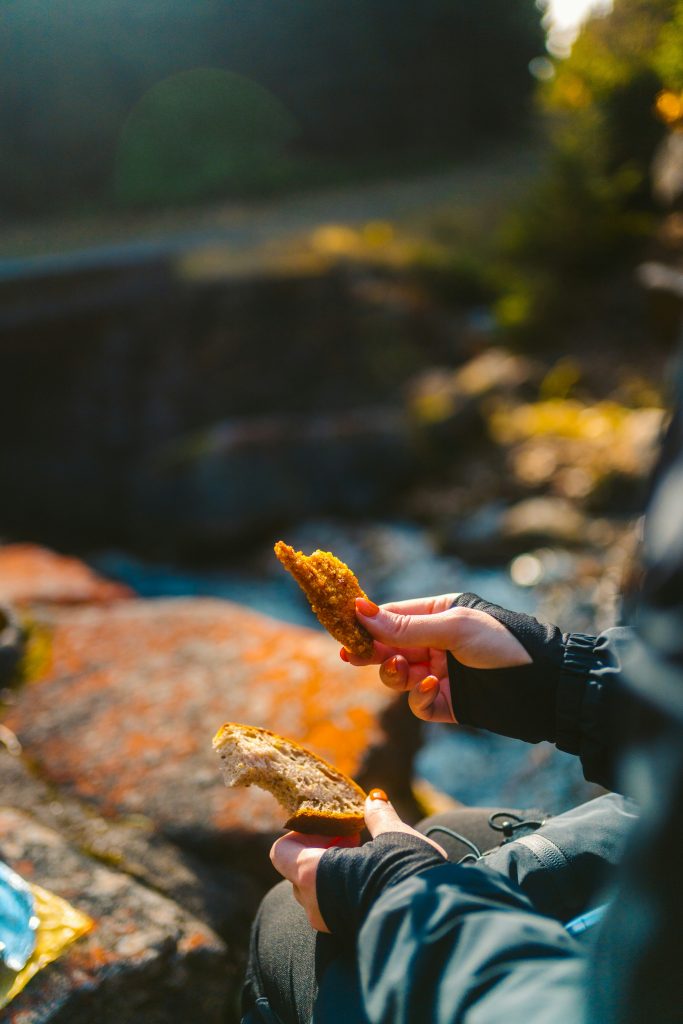
One of the most common questions beginners ask before heading into the hills is simple: how much food should you bring on a hike?
Bring too little and you end up tired, irritable, and counting the minutes until you reach the car park. Bring too much and you spend the entire walk carrying a backpack full of snacks you never eat.
The good news is that there’s a fairly simple way to estimate the right amount. Most hikers don’t need complicated calculations. A few basic guidelines will keep your energy up without overloading your pack.
A Simple Rule Most Hikers Follow
For most day hikes, a good rule is:
Bring one small snack every 60–90 minutes of walking, plus a proper lunch if you’ll be out for several hours.
So a typical full-day hike might look like this:
• Morning snack
• Lunch
• Afternoon snack
• Emergency snack
Yes, the emergency snack is important. Even experienced hikers keep one spare bar or chocolate tucked away somewhere in their bag.
If the weather turns, the route takes longer than expected, or you simply underestimate the climb, you’ll be glad it’s there.
How Many Calories Do You Burn Hiking?
Hiking burns more energy than many people realise, especially in the UK where routes often involve steep climbs and uneven terrain.
A rough estimate is:
• Easy hike: 300–400 calories per hour
• Hill walking: 400–600 calories per hour
• Mountain hikes: 600+ calories per hour
This is why even a relatively short hike can leave you feeling surprisingly hungry.
If you’re curious about the numbers, our guide on How Many Calories Do You Burn Hiking? explains how terrain, pace, and elevation affect energy use.
What Food Is Best to Bring on a Hike?
The best hiking food is simple, lightweight, and easy to eat while walking.
Most hikers prefer snacks that are:
• High in calories
• Easy to pack
• Quick to eat
• Not messy
Some reliable options include:
• flapjacks
• cereal bars
• trail mix
• nuts
• bananas
• sandwiches
• chocolate
• peanut butter wraps
Flapjacks in particular are almost a universal hiking food in the UK. They pack a surprising amount of energy into a small space.
Don’t Forget Real Food
Snacks are great, but if you’re hiking for several hours it’s usually worth bringing something more substantial as well.
A proper lunch can make a huge difference halfway through a long walk.
Common choices include:
• sandwiches
• wraps
• pasta salad
• leftover pizza
• sausage rolls
Some hikers swear by nothing more than chocolate bars and nuts. Others prefer an actual meal with a view.
Either approach works. Hiking tends to make almost anything taste good.
Always Bring a Little Extra
One of the simplest mistakes beginners make is packing just enough food.
Hikes can take longer than expected for all sorts of reasons.
You might:
• take a wrong turn
• stop longer for photos
• encounter rough terrain
• slow down on steep climbs
Having one spare snack can make the difference between a comfortable walk and a fairly miserable final hour.
This same principle applies to water too. Our guide on How Much Water Should You Bring on a Hike? covers that in more detail.
Adjust for Weather and Distance
Food needs also change depending on the conditions.
Cold weather often increases hunger because your body burns more energy staying warm.
Longer hikes also require more fuel.
For example:
Short walk (2–3 hours)
One or two snacks is usually enough.
Half-day hike (4–5 hours)
Bring several snacks plus a light lunch.
Full-day hike (6–8 hours)
Bring multiple snacks, lunch, and a backup snack.
You don’t need to overthink it, but it’s better to slightly overpack than run out of energy halfway through a climb.
Final Thoughts
So how much food should you bring on a hike?
For most day hikes in the UK, the answer is fairly straightforward. Pack a few high-energy snacks, bring a proper lunch if you’ll be out for several hours, and always keep one spare snack in your bag just in case.
Hiking tends to make people hungrier than expected, especially on steep or longer routes.
And if you reach the end of the walk with an uneaten chocolate bar still in your pack, well… that’s hardly the worst outcome.