Last reviewed and updated: March 2026
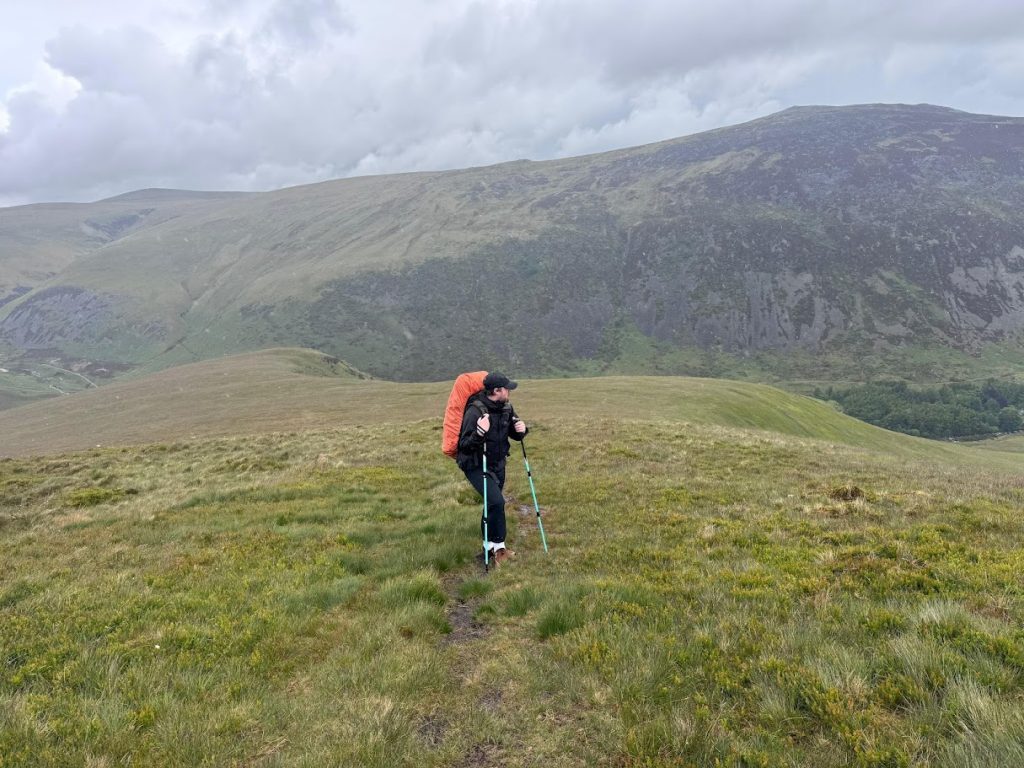
If you spend any time walking in the hills, you will eventually notice two types of hikers.
The first group stroll along happily with nothing but a backpack and perhaps a sandwich. The second group look like they are cross country skiing across the Lake District despite the complete absence of snow.
Those are the hiking pole users.
To the uninitiated, hiking poles can look slightly ridiculous. They give the impression that the walker has either lost their balance or is attempting to audition for a Nordic skiing team.
But after using them properly on a few long hikes, you start to understand why so many hikers swear by them.
So the real question is simple.
Are hiking poles actually worth bringing on a hike?
The Short Answer
Yes. Hiking poles can be extremely helpful on steep climbs, long descents, and uneven terrain.
They reduce strain on your knees, improve balance on rough trails, and make carrying a backpack much easier over longer distances.
That said, they are not essential for every walk. Plenty of hikers never use them at all and still manage to reach the summit without collapsing into a dramatic heap.
Like many things in hiking, they are useful tools rather than strict requirements.
Why Many Hikers Use Poles
Once you try them on the right kind of hike, their advantages become fairly obvious.
They reduce pressure on your knees
Downhill sections are where hiking poles really shine.
When you descend a steep trail, your knees take a lot of impact with every step. Poles help transfer some of that weight through your arms instead.
It is a small difference at first. After several miles of descending in the Lake District, it becomes a very noticeable difference.
They improve balance
British hiking trails are rarely smooth.
You are often dealing with wet rocks, muddy paths, loose gravel, and the occasional mysterious patch of ground that looks stable but behaves more like porridge.
Hiking poles give you extra points of contact with the ground, which makes it easier to stay balanced.
They help with steep climbs
On uphill sections, poles let you push slightly with your arms as well as your legs.
This spreads the effort across more muscles, which can make long climbs feel less exhausting.
It will not magically turn you into a mountain goat, but it does make steep paths a bit more manageable.
When Hiking Poles Are Most Useful
Poles are not equally useful on every hike.
Some situations benefit far more than others.
Long hikes
If you are walking for several hours, small advantages start to add up.
Anything that reduces fatigue or strain becomes valuable when you are still several miles away from the car park.
Mountain hikes
Steep ascents and descents are where poles really earn their place.
Walks like Helvellyn or Scafell Pike often include loose paths and rocky terrain where extra balance is helpful.
Carrying a heavy backpack
If you are wild camping or carrying a full hiking pack, poles make a noticeable difference to stability and comfort.
They help distribute the weight of the pack across your body.
When You Probably Do Not Need Them
Despite their benefits, hiking poles are not essential for every walk.
Short countryside walks
If you are doing a relaxed two hour stroll on a well maintained trail, poles are probably unnecessary.
They might even feel slightly awkward.
Flat terrain
Poles are far less useful on flat ground. At that point you are mostly just tapping the earth rhythmically like a slightly confused metronome.
If you simply prefer hiking without them
Many hikers never use poles and enjoy walking perfectly happily without them.
Hiking is not a technical sport with strict rules. If you do not like poles, you are free to leave them at home without being escorted out of the national park.
Do Beginners Need Hiking Poles?
Beginners often assume hiking poles are something only experienced hikers use.
In reality, beginners can benefit from them just as much.
They help with balance on rough trails and can make longer walks feel less intimidating.
However, they are not something you must buy immediately.
If you are just starting hiking, it is usually better to focus on comfortable footwear and weather appropriate clothing first.
Poles can always be added later once you start tackling longer or steeper hikes.
If you are thinking of getting a pair, our guide to the best trekking poles for UK trails explains what to look for.
Many beginners also struggle with simple things like pacing themselves, packing too much gear, or choosing the wrong footwear. Our guide to beginner hiking mistakes to avoid explains some of the most common problems new hikers run into on the trail.
Final Thoughts
Hiking poles might look a little strange at first, but they are genuinely useful tools for many types of hikes.
They improve balance, reduce strain on your knees, and help distribute effort across your body during long walks.
That does not mean everyone needs them. Plenty of hikers enjoy the hills perfectly well without carrying two extra sticks.
But if you regularly hike in steep terrain or carry a heavy backpack, they are definitely worth trying.
At the very least, they will make you look slightly more like you know what you are doing, which is always helpful when passing other hikers on a narrow mountain path.